Quick Answer
Yes. The safest areas to live in Panama are gated communities and quiet expat towns: Punta Pacífica and Costa del Este in Panama City, Coronado and Buenaventura on the Pacific coast, Pedasí in the Azuero, and Boquete, Volcán, and El Valle in the highlands. Violent crime is concentrated in specific urban pockets, while most expat areas see mostly petty theft.
Key Takeaways
- Panama carries a U.S. State Department Level 2 advisory, "Exercise Increased Caution", because of crime, with two Level 4 "Do Not Travel" sub-areas: the Mosquito Gulf and parts of the Darién Region.
- Panama's homicide rate was about 12.9 per 100,000 inhabitants in 2024 (581 homicides per the Ministry of Security) and roughly flat in 2025, below Costa Rica's rate and above the U.S. rate.
- Roughly 75% of homicides are concentrated in Panama City and Colón, which is why national averages overstate the risk in expat areas and understate it in a few urban districts.
- The safest expat choices are controlled-access gated communities and small towns: Punta Pacífica, Costa del Este, and Santa María in the capital; Coronado and Buenaventura on the coast; Pedasí in the Azuero; Boquete, Volcán, and El Valle in the highlands.
- The realistic day-to-day risk for residents is petty theft and property crime, not violent crime: car break-ins, bag snatching, and phone theft in busy areas.
- A gated community reduces risk, it does not eliminate it; management quality, entry controls, and neighbors matter more than the wall itself.
- Crime figures in this guide come from official and specialist sources, and neighborhood guidance reflects professional expat and relocation consensus, last verified November 3, 2026.
Disclaimer: this article is general information, not a guarantee of safety, and not legal, financial, or relocation advice. Crime changes by block and by hour, and you should verify current conditions with local authorities, your embassy, and on-the-ground visits before deciding where to live.
Is Panama Safe in 2026? The Honest Big Picture
Yes, Panama is broadly safe for expats, and the safest areas to live in Panama follow a clear pattern: gated, controlled-access communities and quiet small towns. The honest big picture is that the country is not uniformly safe at every hour in every district; violent crime is real, but it is concentrated in specific places that most buyers never need to visit.
Start with the official figures. Panama's Ministry of Security recorded 581 homicides in 2024, a 4.4% increase over the 556 recorded in 2023, which put the national rate at roughly 12.9 homicides per 100,000 inhabitants. Preliminary tallies for 2025 point to around 593 homicides, essentially flat. For context, that rate is lower than Costa Rica's (about 16.6 per 100,000 in 2024) and higher than the United States' (about 4 per 100,000).
The number that matters most for choosing where to live: ministry data shows roughly 75% of homicides are concentrated in Panama City and Colón. National averages therefore overstate the risk in gated neighborhoods, resort towns, and highland villages, and understate it in the handful of urban zones that drive the statistics. The national rate also peaked around 15 to 17 per 100,000 in the mid-2010s, so today's figures are not a new high.
| Measure | Panama | Costa Rica | United States |
|---|---|---|---|
| Homicide rate, 2023 (per 100,000) | About 11.5 | About 17.2 | Reference only |
| Homicide rate, 2024 (per 100,000) | About 12.9 | About 16.6 | About 4 |
| 2025 trend | Roughly flat (about 593 homicides) | Roughly steady (about 16.8) | Reference only |
| U.S. State Department advisory | Level 2 (August 19, 2026) | Not cited in this guide | Not applicable |
What does this mean for you? If you live in a gated community or a small expat town, practice normal street awareness, and avoid the few high-crime districts at night, your experience of Panama will almost certainly be safe. Petty theft is the realistic day-to-day concern, not armed violence. In keeping with how we work, here is the good, the bad, and the reality.
What the U.S. State Department Says About Panama
The U.S. State Department currently places Panama at Level 2, "Exercise Increased Caution", because of crime, an advisory reissued on August 19, 2026. Level 2 is a common designation across Latin America and for many tourist destinations worldwide; it means "be aware and be careful," not "do not go."
Two sub-areas carry the highest rating, Level 4, "Do Not Travel": the Mosquito Gulf on the northern Caribbean coast and parts of the Darién Region bordering Colombia, both flagged for crime. Neither is on the radar of expat buyers in Panama City, the Pacific beaches, or the highlands.
The same advisory notes that large demonstrations can occur with little notice. An earlier "unrest" indicator was removed in the August 2026 update, but protest roadblocks have occasionally affected travel, mainly along the Pan-American Highway. If you are traveling during election or labor cycles, it is worth watching local news and your embassy's alerts.
Read this as context, not verdict. A country-level advisory averages every province together; it cannot tell you that Punta Pacífica is a gated peninsula with round-the-clock security while a district a few kilometers away struggles with poverty and organized crime. Choose your data at the neighborhood level, not the country level.
The Safest Areas to Live in Panama, Area by Area
Across the markets we work in every day, the safest areas to live in Panama consistently fall into two patterns: gated, controlled-access communities and small towns where people know each other. Here is how that plays out region by region, with the caveat that block-level conditions vary and deserve a personal visit.
Panama City: Choose a Gated Neighborhood
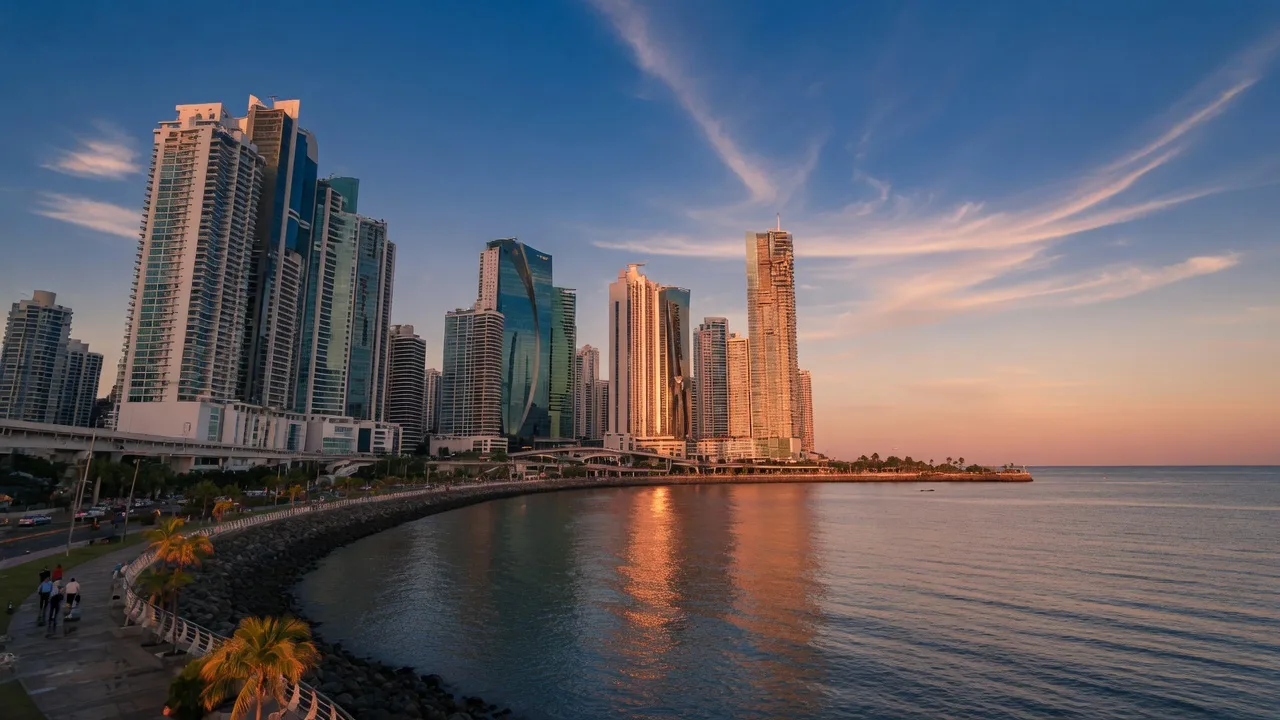
Punta Pacífica is the most consistently cited safe option in the capital: a gated peninsula on the Bay of Panama with 24-hour armed security, controlled access, CCTV, and the Johns Hopkins-affiliated Punta Pacífica hospital on site. Costa del Este is a planned residential district of gated communities and tower developments with private security, the default for families. Santa María is a large private gated community with club infrastructure and controlled entry. San Francisco, Paitilla, Obarrio, El Cangrejo, and Clayton are also generally safe and walkable with normal urban caution at night. Our Panama City neighborhood guide and the Punta Pacifica and Costa del Este location pages break each area down in detail.
The Pacific Coast: Resort Communities and Gated Estates
Coronado, about 75 to 90 minutes from Panama City, is the established expat beach town: most residential areas sit inside walls with controlled access and private guards, and it is consistently cited among Panama's safest coastal communities. Nearby Playa Blanca, Buenaventura, San Carlos, and Nueva Gorgona add luxury gated resorts with resort security and on-site amenities. Beachside gated condos in the Coronado-to-Playa Blanca corridor commonly list between about US$1,600 and US$3,200 per square meter, which tells you what controlled-access living costs at the beach.
Pedasí and the Azuero Peninsula: Small-Town Safety
Pedasí is a fishing town on the Pacific side of the Azuero Peninsula with a tight-knit community and a reputation among expats for exceptionally low crime. Gated options such as Costa Pedasí and Andromeda offer round-the-clock security, while the town center itself is walkable and relaxed. It is also genuinely small and remote, so expect a quiet lifestyle and a drive to the nearest larger town; our Pedasí and Playa Venao location guide covers the trade-offs honestly.
The Chiriquí Highlands: Boquete and Volcán
Boquete is the best-known expat town in the country: spring-like weather, thousands of foreign residents, and low property crime. Gated mountain communities such as Alto Boquete add controlled access, and rentals inside gated communities commonly run about US$1,500 to US$2,500 per month per expat guides. Volcán and Cerro Punta, in the same province, are quieter farm-country communities where locals describe walking nearly anywhere safely; gated options are fewer, so community size and rural calm are the real security factors there.
El Valle de Antón: A Crater-Town Retreat
El Valle de Antón, about 90 minutes to two hours from Panama City by road, is a crater town and a favorite weekend and second-home destination for Panama City families. It has a village atmosphere, low crime, and a climate that attracts retirees, which is why it appears repeatedly in safety-focused expat guides.
| Area | Type of living | Why expats consider it safe | Typical property focus |
|---|---|---|---|
| Punta Pacífica | Gated city peninsula | 24/7 armed security, controlled access, CCTV | High-rise condos |
| Costa del Este | Planned city district | Gated communities, private security | Houses and towers |
| Santa María | Gated city community | Controlled entry, club amenities | Houses |
| Coronado / Playa Blanca | Gated beach resorts | Perimeter walls, resort security | Condos and villas |
| Pedasí | Small beach town | Low crime, tight-knit community | Lots, houses, condos |
| Boquete | Highlands town | Small community, strong expat networks | Houses and mountain lots |
| Volcán / Cerro Punta | Highlands countryside | Historically very low crime | Farms and lots |
| El Valle de Antón | Crater town | Village atmosphere, low crime | Second homes and houses |
Why Gated Communities Dominate Panama's Safest Areas
Walk into almost any new development aimed at international buyers in Panama City, Coronado, or the beach corridor, and you pass a security checkpoint before you see a single unit. That is not decoration; it is the market's answer to a real concentration of property crime.
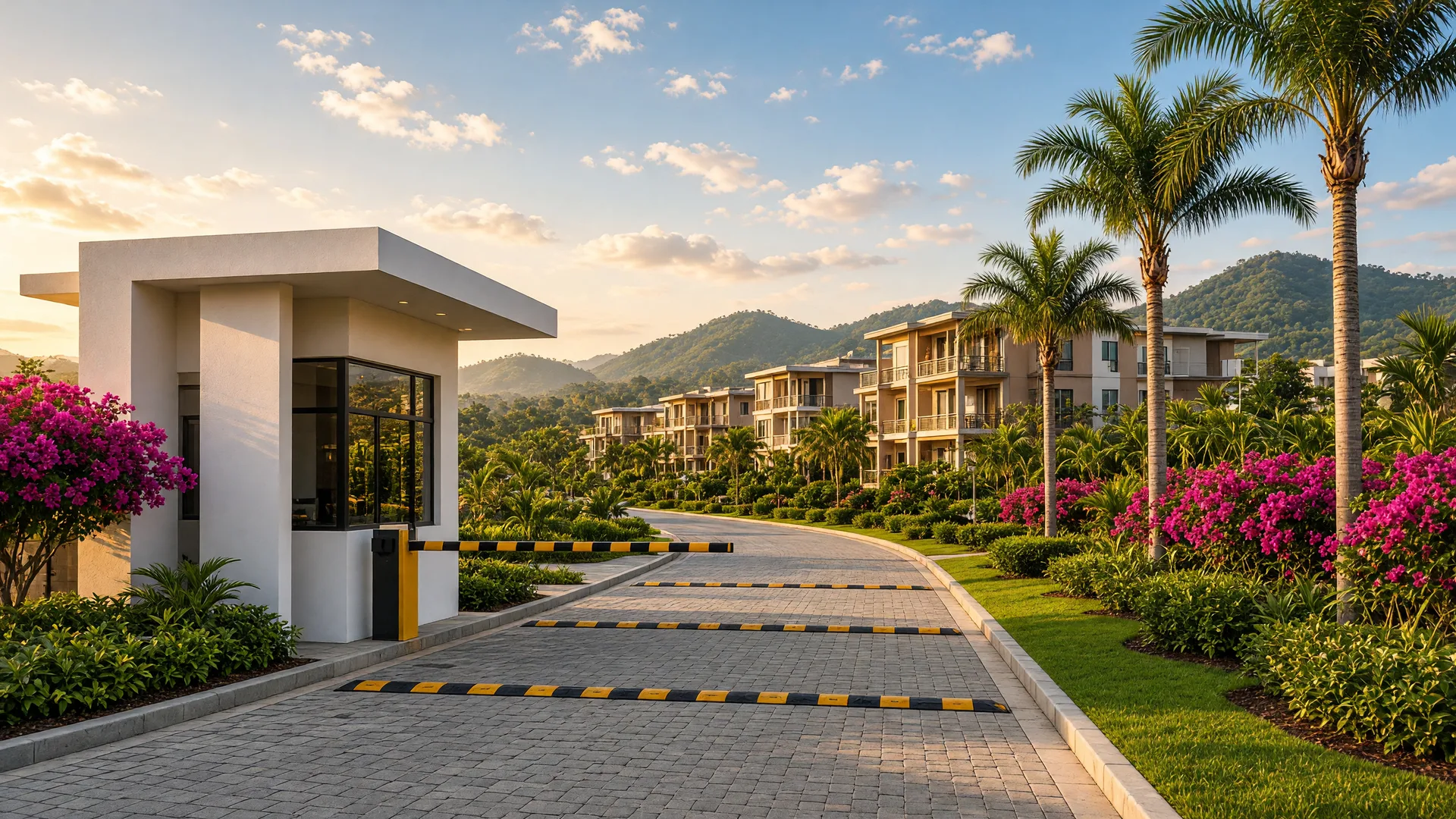
Typical features include a single controlled entry point, 24-hour security staff, CCTV coverage, guest registration, and perimeter walls. In towers, expect key-card or fingerprint access to units and parking. What these layers reduce is opportunity crime: theft from vehicles, break-ins, and snatching, which is exactly the category that touches expats most often.
Security has a price, and you should budget it honestly. Gated beach condos in Coronado and Playa Blanca commonly list from about US$1,600 to US$3,200 per square meter; in Boquete, furnished rentals inside gated communities often run US$1,500 to US$2,500 per month. Monthly maintenance fees in managed communities cover guards, common areas, and CCTV, and they come out of your budget before mortgage or rent. A good broker will itemize them before you commit.
And here is the reality: a wall reduces risk, it does not remove it. Property crime happens inside gated communities too, and management quality varies widely. The deciding factors are whether entry controls actually work, whether common areas are maintained and lit, and whether neighbors look out for one another. Visit at night, talk to residents, and check how the gate operates before you buy on the strength of a brochure.
Where Crime Actually Happens in Panama
Being specific about risk is part of honest guidance. The districts expat and security guides consistently flag in the capital are El Chorrillo, Curundú, Calidonia, and parts of San Miguelito. The city of Colón on the Atlantic side has elevated crime, and the Darién Region and the Mosquito Gulf carry the State Department's highest warning level. These are the areas that push the national homicide statistic up, and they explain why that statistic says little about Costa del Este or Boquete.
Knowing them still matters when you are viewing property, choosing a rental, or deciding where to walk at night. A useful rule from local brokers: compare neighborhoods block by block, not by municipal averages, and ask where the nearest police substation is before you sign anything.
The honest downside is that opportunistic crime is common enough to treat as normal: car break-ins, bag snatching, and phone theft happen in busy areas across the city, including tourist districts. None of this changes the broad conclusion for most buyers; it does shape daily habits, which we cover next.
How to Stay Safe as an Expat in Panama: Practical Rules
Personal safety in Panama is mostly a set of habits. This is the practical checklist we give clients, whether they are renting for a season or buying their permanent home.
- Save the emergency numbers. Dial 911 for general emergencies, including police, fire, and medical response; 104 reaches the National Police (Policía Nacional) directly.
- Choose the neighborhood, then the building. Prefer gated options where they fit your budget, and verify entry controls, lighting, and CCTV before signing a rental or a purchase contract.
- Rent before you buy. Get to know an area at different hours before committing hundreds of thousands of dollars. Our guide to renting before buying lays out the logic.
- Keep valuables out of sight. Do not leave phones, bags, or laptops visible in parked cars, and avoid walking through busy areas with your phone in hand.
- Drive with doors locked. Especially at intersections and after dark; use toll roads and well-lit routes when practical.
- Use ATMs inside banks and malls during the day. Avoid street-corner machines at night, and do not carry large amounts of cash.
- Do your due diligence on the purchase itself. Verify the title at the Public Registry and close through licensed professionals; our buying-safety guide and title-checking guide cover this in depth.
- Register with your embassy. U.S. citizens can enroll in the Smart Traveler Enrollment Program (STEP) for alerts; other nationalities should store their consulate contact details.
- Build community. In small towns especially, neighbors are your best early-warning system, and they make daily life safer in ways no wall can.
Common Mistakes When Choosing a "Safe" Area
Buyers make the same handful of errors when they weigh safety, and each one is avoidable.
- Judging the whole country by one statistic. The national homicide rate includes districts you will never live in; it says almost nothing about Punta Pacífica or Boquete.
- Assuming gated means bulletproof. Management quality varies, and a gate with a broken barrier is a gate that does nothing. Inspect the operation, not the brochure.
- Buying sight unseen. An area can look perfect in photos and feel different after dark. Visit first, or at minimum rent first; our buying process guide explains why the physical visit matters.
- Only seeing the neighborhood in daylight. Street lighting, foot traffic, and security staffing at night are a different story worth checking.
- Over-trusting "best of" lists. Lists like this one are a starting point for research, not a verdict; verify on the ground with residents and brokers.
- Ignoring the commute. A very remote "safe" area can mean an exhausting drive to work, school, or healthcare. Safety and lifestyle have to fit together or you will not stay.
The Bottom Line: Which Safe Area Should You Choose?
If you take one idea from this guide, make it this: the safest areas to live in Panama are not a fixed list; they are a match between security features and your daily life. A family may be happiest in Costa del Este, a gardener in Volcán, a surfer in Pedasí or Playa Venao, and a couple that wants city convenience with full security in Punta Pacífica.
The data gives you a fair starting picture: a Level 2 advisory, a national homicide rate around 12.9 per 100,000 that is heavily concentrated in Panama City and Colón, and expat experience that is overwhelmingly positive in gated communities and small towns. The next step is personal: visit, walk the streets at night, talk to residents, and compare real options market by market. Our honest comparison of the best places to live in Panama and the location guides for Panama City, Boquete, Volcán, El Valle, and Pedasí are a good place to start.
And when you are ready to look at properties, you do not have to interpret any of this alone. We know Panama, we have walked these streets with clients for over a decade, and we give you the good, the bad, and the reality for your specific situation before we ever show you a house.
Frequently Asked Questions
Is Panama safe for expats in 2026?
Generally yes. Panama carries a U.S. State Department Level 2 advisory because of crime, but violent crime is concentrated in specific districts, mainly parts of Panama City and Colón. Expats who live in gated communities or small towns and practice normal street awareness overwhelmingly report a safe experience. The realistic risks are petty theft and property crime, not armed violence.
What are the safest areas to live in Panama?
The areas most consistently cited by expat and relocation guides are gated communities and quiet towns: Punta Pacífica, Costa del Este, and Santa María in Panama City; Coronado, Playa Blanca, and Buenaventura on the Pacific coast; Pedasí in the Azuero; and Boquete, Volcán, and El Valle in the highlands. All offer controlled access or a small-community atmosphere with low violent-crime rates.
What is the safest neighborhood in Panama City?
Punta Pacífica is the most consistently cited: a gated peninsula on the Bay of Panama with 24/7 armed security, controlled access, CCTV, and the Johns Hopkins-affiliated Punta Pacífica hospital on site. Costa del Este and Santa María are close alternatives for families, with gated developments and private security. San Francisco, Paitilla, Obarrio, El Cangrejo, and Clayton are generally safe with normal urban caution.
Is Coronado safe to live in?
Yes. Coronado is one of Panama's most established expat beach towns, about 75 to 90 minutes from Panama City, and most residential areas sit inside walls with controlled access and private security. Newer gated resorts at Playa Blanca and Buenaventura follow the same model. Crime is rare but not zero, so standard habits like locking cars and keeping valuables out of sight still apply.
Is Boquete safe for retirees?
Boquete is widely regarded as one of the safest places in Panama: a small mountain town with a large expat community, low property crime, and a culture where strangers are noticed quickly. Gated communities such as Alto Boquete add controlled access. The main practical risks are winding mountain roads and minor property theft, not violent crime, and Volcán offers a quieter, similar profile.
Is Pedasí safe?
Pedasí is frequently described by expats as exceptionally safe for Panama: a tight-knit fishing town on the Azuero Peninsula where violent crime is rare and the community knows itself well. Gated developments like Costa Pedasí and Andromeda provide 24-hour security for those who want it. It is also genuinely small and remote, so expect a quiet lifestyle and a significant drive to the nearest larger town.
Which areas of Panama should expats avoid?
Within Panama City, guides consistently flag El Chorrillo, Curundú, Calidonia, and parts of San Miguelito for elevated crime, and the city of Colón carries a similar warning. The Darién Region and the Mosquito Gulf are rated Level 4, "Do Not Travel," by the U.S. State Department. None of these need affect a gated-community or resort-town buyer, but they show where caution is genuinely warranted.
What is the emergency number in Panama?
Dial 911 for general emergencies, including police, fire, and medical response; 104 reaches the National Police directly. Many expats also save their embassy or consulate number, and U.S. citizens can enroll in the Smart Traveler Enrollment Program (STEP) to receive alerts. Post the numbers in your phone and your home before you move.
Ready to Find the Safe Area That Fits Your Life?
We know Panama, and we know that the safest area is the one that matches both your security needs and the way you actually want to live. Whether you are comparing Punta Pacífica, Coronado, Boquete, or Pedasí, we will give you the good, the bad, and the reality based on what is on the ground. Call or WhatsApp us at +507-6356-7777, or email info@panamapropertyexperts.com. No pressure, just good information.
Sources and References
- U.S. Department of State: Panama Travel Advisory
- U.S. Embassy in Panama: Travel Advisory Reissued August 19, 2026
- Newsroom Panama: Ministry of Security 2024 Crime Figures
- Statista: Homicide Rate in Panama
- TheGlobalEconomy: Panama Homicide Rate
- InSight Crime: 2024 Homicide Round-Up
- InSight Crime: 2025 Homicide Round-Up
- Numbeo: Crime in Panama City
- International Insurance: The Safest Cities to Live in Panama
- Reside Panama: Is Panama Safe in 2026? An Honest Expat Guide by Neighborhood
- Live and Invest Overseas: Living in Panama
Last verified November 3, 2026. This article is general information, not a guarantee of safety, and not legal, financial, or relocation advice.