Quick Answer
There is no single best neighborhood in Panama City: the right district depends on your lifestyle and goals. Punta Pacifica and Costa del Este suit luxury buyers and families, San Francisco and El Cangrejo deliver the strongest rental yields, Avenida Balboa offers bayfront views, and Casco Viejo rewards investors in licensed short-term rentals. Prices range from about US$1,300 per m² in San Francisco to over US$4,000 per m² for restored Casco Viejo properties.
Key Takeaways
- Citywide average condo prices in Panama City sit near US$2,200 to US$2,500 per m² in recent 2025–2026 reports, with luxury waterfront towers well above that.
- Punta Pacifica and Avenida Balboa are the prestige waterfront addresses, with resale condos from roughly US$1,600 to US$3,500 per m².
- Costa del Este is the strongest all-round family choice: gated communities, international schools, and premium prices near US$2,300 to US$3,500 per m².
- San Francisco and El Cangrejo offer the best long-term rental yields, reported around 6% to 9% gross in 2026 market analyses.
- Casco Viejo is the tourism and short-term rental hub, with restored colonial properties at about US$3,200 to US$5,500 per m².
- Short-term rentals are restricted in most of Panama City; licensed operations concentrate in designated tourist zones such as Casco Viejo.
- Foreigners buy with the same rights as Panamanians, but expect 3% to 4% in closing costs and mortgage down payments near 30% to 40%.
Prices, rents, yields, and regulations change over time and vary by building. The figures below are market estimates drawn from published 2025–2026 sources, not a quote or legal advice. Confirm current numbers and rules with a licensed local professional before you commit.
What Are the Best Neighborhoods in Panama City?
The best neighborhoods in Panama City are Punta Pacifica, Costa del Este, Avenida Balboa, San Francisco, El Cangrejo, and Casco Viejo, but the honest answer is that each serves a different buyer. This is the question we hear most from international clients: where should I live, retire, or invest in the capital? Rents and prices differ enormously from one district to the next, and so does the lifestyle. A luxury tower in Punta Pacifica and a renovated colonial apartment in Casco Viejo exist in the same city but in different worlds.
As of the 2026 market reports, Panama City condos average roughly US$2,200 to US$2,500 per square meter citywide, and gross rental yields average about 7% with the best districts reaching 8% to 9%. This guide breaks down each neighborhood by price, rent, yield, safety, schools, and feel, so you can match the district to your situation instead of the other way around.
How to Choose: Match the Neighborhood to Your Lifestyle
Start with your life, not with a listing. The neighborhood that is right for a retired couple walking to cafés is rarely right for a family with school-age children, and an investor looking for yield will make a different choice than a buyer looking for a trophy view.
Luxury buyers and executives
Punta Pacifica, Costa del Este, and Santa María form the prestige tier: high-rise towers and gated communities with 24/7 security, top hospitals and schools nearby, and the city’s highest prices per square meter. Buyers here value convenience, privacy, and stable values over pure yield.
Income-focused investors
San Francisco and El Cangrejo offer the strongest balance of entry price and rental demand, with gross yields often reported at 6% to 9%. Casco Viejo is the exception: higher risk, higher reward, and one of the few areas where official short-term rental licensing is available.
Families
Costa del Este wins for families: master-planned streets, parks, waterfront trails, and several international schools within minutes. Clayton offers a leafier, quieter alternative on the former Fort Clayton grounds, popular with diplomats and embassy staff.
Retirees
San Francisco, Bella Vista, and El Cangrejo combine walkability with easy access to private clinics and the Cinta Costera promenade. Costa del Este suits retirees who prefer a quieter, gated setting and are happy to drive or use ride-hailing.
Panama City’s Best Neighborhoods at a Glance
The table below summarizes the main districts. Ranges reflect published 2025–2026 market data and vary with building vintage, floor, and view.
| Neighborhood | Best For | Typical Price per m² | Typical Monthly Rent |
|---|---|---|---|
| Punta Pacifica | Luxury, security, waterfront living | US$2,000–$2,900 | ~US$3,450 |
| Costa del Este | Families, executives, gated living | US$2,300–$3,500 | ~US$2,400 |
| Avenida Balboa | Bay views, urban lifestyle | US$1,600–$3,500+ | ~US$1,900 |
| Casco Viejo | Culture, nomads, short-term rental | US$3,200–$5,500 | US$1,200–$2,500 (1BR) |
| San Francisco | Rental yield, balanced living | US$1,300–$2,700 | ~US$1,400 |
| Obarrio | Professionals, walkability | Around US$2,000 | US$900–$1,800 (2BR) |
| Bella Vista | Urban rental demand | Around US$2,000 | ~US$1,500 |
| El Cangrejo | Value, food scene, yield | Around US$2,000 | US$900–$2,000 (1–2BR) |
| Clayton | Green, quiet, family homes | House market, varied | House market |
| Santa María | Golf, gated family living | Premium, next to Costa del Este | House market |
The Top Neighborhoods, Explained
Punta Pacifica: the premium waterfront enclave
Punta Pacifica sits on reclaimed land beside the Bay of Panama and is part of the San Francisco corregimiento. It is Panama City’s most polished high-rise district, anchored by the Hospital Punta Pacifica, an affiliate of Johns Hopkins Medicine International, and the Multiplaza Pacific mall. Condos typically trade from about US$2,000 to US$2,900 per m², and median asking rents near US$3,450 a month. This is a turnkey luxury environment: safe, walkable, and convenient, with price per square meter at the top of the city’s range.
Costa del Este: the family and business district
About 12 km from Tocumen International Airport, Costa del Este is a master-planned district that mixes glass office towers with gated residential communities, parks, and a waterfront promenade. International schools such as the International School of Panama, King’s College School Panama, and Balboa Academy sit nearby. Premium condos run about US$2,300 to US$3,500 per m² and total prices often land between US$300,000 and US$950,000. Demand from professionals keeps vacancy low and values stable, making it a favorite for long-term buyers.
Avenida Balboa and the Cinta Costera: the iconic bayfront
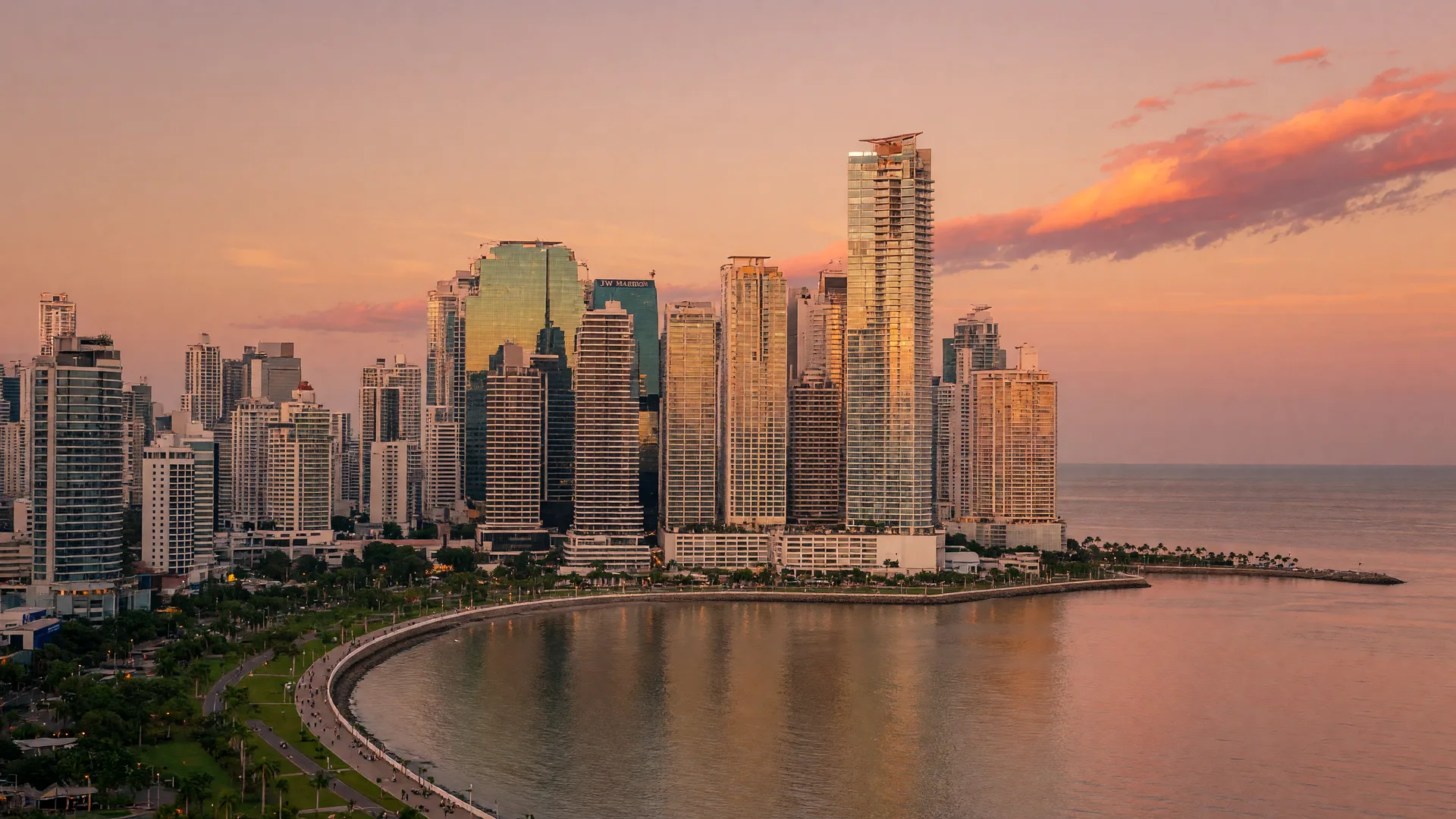
Avenida Balboa is the oceanfront boulevard with the best-known skyline view in Panama, running alongside the Cinta Costera promenade. Resale condos range from roughly US$1,600 to US$3,500 per m² depending on floor and view, with penthouses listed well above. Median rents sit near US$1,900 a month. You pay a premium for the panorama, and that premium tends to hold: bay-front apartments resell well, but the same budget buys much more space inland.
Casco Viejo: history, tourism, and licensed short-term rentals
Casco Viejo is the UNESCO-recognized colonial quarter founded in 1671, with cobblestone streets, plazas, rooftop bars, and the city’s densest tourism. Restored properties typically price at about US$3,200 to US$5,500 per m², and one-bedroom apartments rent from US$1,200 to US$2,500 a month. Nightly rates and occupancy are the highest in Panama, which is why this is one of the few districts where short-term rental licensing is actually available. It is bohemian, loud, and walkable: wonderful for the right buyer, wrong for anyone wanting quiet or parking.
San Francisco: the balanced all-rounder
San Francisco is the city’s best all-round district: central, walkable, and anchored by Parque Omar, a former golf course that serves as Panama City’s answer to Central Park. Prices run from about US$1,300 to US$2,700 per m² and median rents near US$1,400 a month. Reports regularly flag San Francisco for the strongest rental demand and gross yields in the city, often 7% to 8%, which makes it a favorite for working expats and investors alike.
Obarrio and Bella Vista: the walkable urban core
Obarrio is the financial heart of the capital, dense with banks, offices, hotels, and apartments, with two-bedroom rents around US$900 to US$1,800. Bella Vista runs between Obarrio and the bay, mixing older mid-rises with new towers a short walk from the Cinta Costera; rents are similar, and demand from nearby professionals keeps vacancies low. Both are practical, central choices for buyers who want to live where the city works.
El Cangrejo: the walkable foodie district
Built around Vía Argentina, El Cangrejo is lively, multicultural, and more affordable than equivalent central districts, with one- and two-bedroom rents commonly US$900 to US$2,000. Rental analyses regularly put its gross yields at 6% to 9%, among the strongest in the city for the entry price. This is a popular first purchase for investors and a genuinely enjoyable place to live.
Clayton and Santa María: green and gated
Clayton, built on the grounds of the former Fort Clayton, is leafy and low-density, home to the City of Knowledge, several embassies, and international schools, with Albrook’s metro station and the national bus terminal nearby. Santa María, directly beside Costa del Este, is the city’s premier gated golf community, built around an 18-hole Jack Nicklaus-designed course. Both suit buyers who want space, green, and security over urban energy.
What Do Prices Look Like in Each Neighborhood?
As of 2026 reports, the citywide average for condos is roughly US$2,200 to US$2,500 per m², but district averages range from about US$1,300 in parts of San Francisco to more than US$5,000 for restored Casco Viejo properties and premium waterfront towers. The table below shows typical resale ranges, not list-price extremes.
| Neighborhood | Resale Range per m² | Typical Total Budget | Notes |
|---|---|---|---|
| Punta Pacifica | US$2,000–$2,900 | US$395,000–$525,000 typical | Premium towers near the hospital run higher |
| Costa del Este | US$2,300–$3,500 | US$300,000–$950,000 | Mid-market towers from high-US$1,000s |
| Avenida Balboa | US$1,600–$3,500+ | US$250,000–$900,000 | Penthouses US$1.5M–$3M+ |
| Casco Viejo | US$3,200–$5,500 | US$250,000–$800,000 | Restored colonial properties |
| San Francisco | US$1,300–$2,700 | US$180,000–$450,000 | Wide range by age and tower |
| Obarrio / Bella Vista / El Cangrejo | Around US$2,000 | US$150,000–$350,000 typical | Best entry prices in central areas |
Budget beyond the sale price. Buyer closing costs typically run 3% to 4% of the registered value, and foreign buyers who finance should expect a down payment near 30% to 40% with shorter terms than locals receive. Cash buyers avoid that friction, which is why many international clients pay cash or finance at home. Our guides on closing costs and mortgages for foreigners walk through the numbers in detail.
Rental Yields and Investment Potential by District
Panama City’s gross rental yields average about 7% in recent 2025–2026 reports (Global Property Guide measured 6.94% to 7.03%), with net returns after fees, taxes, and maintenance typically closer to 4% to 5%. Where you buy changes the math significantly.
| Area | Gross Yield (Long-Term) | Short-Term Rental | Notes |
|---|---|---|---|
| San Francisco | 7% to 8% | Restricted | Strongest all-round rental demand |
| El Cangrejo | 6% to 9% | Restricted | Lowest entry prices for yield |
| Casco Viejo | 7% to 10% | Licensed zone | Tourism-driven; licensing required |
| Punta Pacifica | 5% to 8% | Building rules vary | Corporate and luxury rentals |
| Avenida Balboa | 4% to 8% | Building rules vary | View premium lowers headline yield |
The short-term rental caveat matters. Short-term rentals are officially restricted in most of Panama City; licensed operations concentrate in designated tourist zones, notably Casco Viejo, where a municipal license is required. Many condo buildings also ban short-term rentals in their HOA rules regardless of the law. Before you pay an Airbnb premium for a unit, confirm the building’s rules and the licensing situation with a local professional. One 2025 dataset showed citywide nightly rates around US$176 with occupancy near 53.5%, a reminder that occupancy, not just rate, drives income.
Safety, Schools, Healthcare, and Getting Around
Safety
Expat guides consistently list Punta Pacifica, Costa del Este, San Francisco, and Clayton among the safest areas of the capital. These districts combine gated or guarded buildings, patrolled streets, and a strong sense of community. Practically, standard city precautions apply anywhere in Panama: keep belongings visible, use registered taxis or ride-hailing at night, and let the neighborhood’s character at different hours guide your decision.
Healthcare
The capital has Panama’s best private healthcare. Hospital Punta Pacifica is affiliated with Johns Hopkins Medicine International and sits in the district of the same name, minutes from San Francisco and Costa del Este. Hospital Paitilla and many private clinics serve the central areas. Quick access to first-class care is one of the strongest arguments for choosing Panama City over beach or mountain towns.
Schools
International families will find several well-regarded options near Costa del Este and Clayton, including the International School of Panama, King’s College School Panama, Balboa Academy, and nearby campuses of the City of Knowledge. School zoning works differently than in North America, so verify commute times for the specific campuses that interest you.
Getting around
The Metro system runs Lines 1 and 2, with Line 3 under construction toward the west side of the province. The network does not directly serve Punta Pacifica, Costa del Este, San Francisco, or Clayton; residents combine the Corredor Sur expressway, ride-hailing, and Albrook’s transit hub, the closest metro and bus connection for the Clayton area. Tocumen International Airport is about 12 km from Costa del Este, and the airport and its new terminal are covered in our airport access update.
Common Mistakes When Choosing a Neighborhood
- Buying sight unseen. A virtual tour tells you nothing about street noise, construction around the corner, or how a tower feels at night. Visit, or work with someone who can walk the street for you.
- Ignoring HOA dues and building age. Monthly maintenance fees and the reserve fund of an older tower can change the real cost of a cheap unit overnight. Ask for both in writing.
- Assuming Airbnb is legal and allowed. The law restricts short-term rentals to designated tourist zones, and buildings can ban them outright. Verify before paying a tourism premium.
- Chasing the lowest price per square meter. The cheapest district can mean the longest commute, weaker schools, or slower appreciation. Price per m² matters only alongside the lifestyle it buys.
- Overlooking the orientation and view. In a city of towers, units facing the bay, the Cinta Costera, or green space resell faster and hold value better than units facing a neighboring wall.
- Renting only on paper. If you plan to live here, renting first for a month or two in your shortlisted district is the cheapest due diligence you can buy.
Your Next Steps: Choosing With Confidence
Shortlist three neighborhoods, not ten. Compare them on the factors in this guide, visit them at different times of day, and run the numbers with real sale prices rather than list-price hope. If investing, model both long-term and short-term scenarios, including taxes, HOA fees, and vacancies. If relocating, test the commute and the grocery store, and rent before you buy.
The best neighborhood in Panama City is the one that fits your life and your numbers, not the one with the most impressive skyline photo. That is exactly the kind of decision we help clients make every week, and we will tell you honestly when a district, or a specific property, is not right for you. To compare Panama City against beach and mountain living first, see our guides to the best places to live in Panama and Panama City versus Coronado.
Frequently Asked Questions
What is the best neighborhood in Panama City for expats?
For most expats the answer is San Francisco: central, walkable, close to Parque Omar and private hospitals, with rents and prices below the luxury waterfront districts. Families usually prefer Costa del Este, and buyers who want maximum convenience and security choose Punta Pacifica. There is no universal winner, only the district that matches your lifestyle and budget.
Which Panama City neighborhood has the best rental yields?
San Francisco and El Cangrejo regularly show the strongest gross yields, around 6% to 9%, because entry prices are moderate and rental demand is steady. Casco Viejo can deliver 7% to 10% through tourism, but only with proper licensing and higher management effort. Luxury waterfront districts like Punta Pacifica and Avenida Balboa typically yield less relative to price.
Is Casco Viejo a good place to live or just for tourists?
Casco Viejo is a genuine residential neighborhood, not only a tourist quarter, and many expats and digital nomads love its walkability, history, and nightlife. The trade-offs are real: noise, limited parking, old buildings, and premium prices per square meter. It suits buyers who want character and short-term rental income and tolerate the urban intensity.
What are the safest neighborhoods in Panama City?
Punta Pacifica, Costa del Este, San Francisco, and Clayton are the areas expat guides most consistently rate as safe, thanks to guarded towers, gated communities, and patrolled streets. Safety also depends on the specific building and block, so ask about security staff, access control, and the neighborhood after dark before you decide.
How much does a condo cost in Panama City?
Citywide averages sit near US$2,200 to US$2,500 per square meter in 2025–2026 reports. Entry-level central condos start around US$150,000 to US$200,000, most one- and two-bedroom units trade between US$250,000 and US$600,000, and luxury waterfront or Casco Viejo properties run far higher. Ranges vary widely with vintage, floor, and view.
Can I run an Airbnb in Panama City?
Only in designated tourist zones, notably Casco Viejo, where a municipal license is required. Short-term rentals are officially restricted in most residential areas of the city, and many buildings ban them in their own rules regardless. Any buyer paying a tourism premium should verify licensing and building rules in writing first.
Should I rent before buying in Panama City?
If you plan to live here, yes, renting first for one to three months in your shortlisted district is the best preparation. It tests the commute, the noise, and the neighborhood at night, and it lets you shop as a resident rather than as a tourist. For investors, a short rental period with active property management can also validate the income assumptions.
Ready to Find the Right Neighborhood in Panama City?
Choosing a district is the first and most important decision you will make. Panama Property Experts will walk you through prices, rents, yields, and the realities of each neighborhood, with no pressure and no obligation. Call or WhatsApp us at +507-6356-7777 or email info@panamapropertyexperts.com to start the conversation.
Sources and References
- Global Property Guide, Gross Rental Yields in Panama
- Global Property Guide, Panama Residential Price History
- The Latinvestor, Panama City Apartment Prices (2026)
- The Latinvestor, Panama City Condo Rental Yields (2026)
- The Latinvestor, Airbnb in Panama City: Is It Profitable?
- Panacomps, Punta Pacifica Neighborhood Guide and Condo Prices
- Panacomps, Costa del Este Condo Prices (2026)
- Panacomps, Avenida Balboa Condo Prices
- Panacomps, Casco Viejo Real Estate Prices
- Panama Home Realty, Bella Vista Guide (2025)
- Panama Home Realty, Avenida Balboa and Cinta Costera Guide (2025)
- Panama Home Realty, Clayton Guide (2025)
- Panama Sovereign, The Expat’s Guide to Living in Panama City
- The Panama Link, Santa María Neighborhood Guide
- Reside Panama, Is Panama Safe in 2026? An Honest Neighborhood Guide
- ReloFirm, Panama City Neighborhood Guide
- Wikipedia, Hospital Punta Pacifica
- AirROI, Panama City Airbnb Market Data
Disclaimer: This article is for general information only and is not legal, tax, investment, or financial advice. Prices, rents, yields, and regulations change, and short-term rental rules vary by building and district. Verify current figures and your specific situation with a licensed Panama attorney, accountant, or real estate professional before proceeding.