Quick Answer
Yes. The Panama Friendly Nations visa is one of the most popular residency routes for international buyers, and you qualify through any of three options: a titled real-estate purchase of at least US$200,000, a US$200,000 fixed-term bank deposit held for three years, or an employment contract with a Panamanian company. It grants a two-year provisional residency first, then permanent residency, and a licensed Panamanian attorney must file your application.
Key Takeaways
- The Friendly Nations visa, created by Executive Decree 343 of 2012 and reformed in August 2021, has three qualifying routes: US$200,000 in real estate, a US$200,000 three-year bank deposit, or a Panamanian employment contract.
- You do not need residency to buy property in Panama. The visa is optional, and most buyers choose it because they plan to live or work in Panama long-term, not because the purchase requires it.
- The real-estate route requires titled property with a registered value of at least US$200,000, free of liens, held in your name or through a Panamanian company where you are the ultimate beneficiary.
- Government fees are fixed at about US$1,050 per applicant, and the realistic all-in cost, including attorney fees, runs roughly US$4,500 to US$8,000.
- Processing takes about 4 to 6 months for a two-year provisional permit. After two years you convert it to permanent residency, and citizenship becomes possible after five years of permanent residency.
- There is no codified minimum annual stay, but you should enter Panama at least once every two years to keep the status active.
- About 51 countries are eligible, including the United States, Canada, the United Kingdom, Australia, and most EU states. Ecuador joined the list in September 2026.
Disclaimer: this article is general information, not legal, tax, or immigration advice. Panama's immigration rules change, and the exact requirements, fees, and timelines should be confirmed with the Servicio Nacional de Migración (SNM) and a licensed Panamanian immigration attorney before you act.
What Is the Panama Friendly Nations Visa?
The Panama Friendly Nations visa is a residency permit for citizens of countries that maintain friendly relations with Panama. It was created by Executive Decree 343 of 2012 and reformed in 2021 by Executive Decrees 197 and 226, effective August 7, 2021, which is the version in force today. For international buyers, investors, and remote workers, it is usually the first or second residency route worth comparing, alongside the Pensionado visa for retirees and the Qualified Investor program for larger capital commitments.
The 2021 reform matters more than most people realize. Before August 2021, a small bank deposit and proof of economic activity were enough, and the old US$5,000 route is what many outdated articles still describe. That route no longer exists. Today the visa is built around three qualifying options: a real-estate purchase of at least US$200,000, a fixed-term bank deposit of at least US$200,000, or an employment contract with a Panamanian company. The structure also changed from a single permanent grant to a two-step process: you first receive a two-year provisional residency, then convert it to permanent residency.
Why do so many buyers look at this visa? Because one of its three routes is a property purchase, which couples the move with an asset you may want anyway. If you are comparing Panama City, Coronado, Boquete, or the Pacific beaches as a place to live, this visa gives you a clear path that does not depend on your age, your pension, or a long business history.
Who Qualifies: The Three Routes Compared
You qualify for the Friendly Nations visa through any one of three routes. There is no age requirement, no language test, and no fixed minimum stay, but you must be a citizen of an eligible country, you must prove economic solvency, and you must file through a licensed Panamanian attorney.
| Aspect | Real-estate route | Bank deposit route | Employment route |
|---|---|---|---|
| Minimum requirement | Titled property with registered value of at least US$200,000 | Fixed-term deposit of at least US$200,000 at a general-license Panamanian bank | Employment contract with a Panamanian company |
| Lock-in period | Property stays in your name | Deposit locked for at least 3 years | None, but the contract must remain valid |
| Extra permits | None | None | Separate MITRADEL work permit required |
| Best suited to | Buyers who want a permanent base in Panama | Investors with cash who are not ready to buy property | Employees or intra-company transferees |
| Main catch | Property must be free of liens for the value to count | Cash sits locked for three years | Visa alone does not grant work rights; the permit is a separate process |
On top of the chosen route, applicants must demonstrate economic solvency. Law-firm guides commonly cite a bank balance of US$4,000 to US$5,000, plus roughly US$2,000 per dependent, though your attorney should confirm the current expectation at the time you apply.
Route 1: Real Estate of at Least US$200,000
The property route is the one that interests most buyers on this site. You buy titled real estate with a registered value of at least US$200,000, held in your own name or through a Panamanian corporation or foundation where you are the ultimate beneficiary. One property or a portfolio can be combined to reach the threshold, and the value that counts is the registered value on the title, not the market price you negotiated.
Route 2: Fixed-Term Deposit of US$200,000
If you are not ready to buy, you can place US$200,000 in a fixed-term deposit at a general-license Panamanian bank, locked for at least three years. The deposit route keeps your capital liquid and available once the term ends. Over a three-year horizon, the same money, deployed well in Panama real estate, can be working much harder, which is why the deposit route suits investors between decisions rather than committed buyers.
Route 3: Employment Contract with a Panamanian Company
The employment route requires a valid contract with a Panamanian employer, registered with the Ministry of Labor (MITRADEL), plus a separate work permit. The visa itself does not grant the right to work; the permit is its own process handled by the employer. This route matters for remote workers who have already been hired by a Panama-registered company.
The US$200,000 Property Route: Where the Money Goes in Panama
For most international buyers, the real-estate route is the natural fit, so let us be specific about what US$200,000 means in the markets we know. The honest answer is that it depends entirely on where you buy, and we will give you the good, the bad, and the reality.
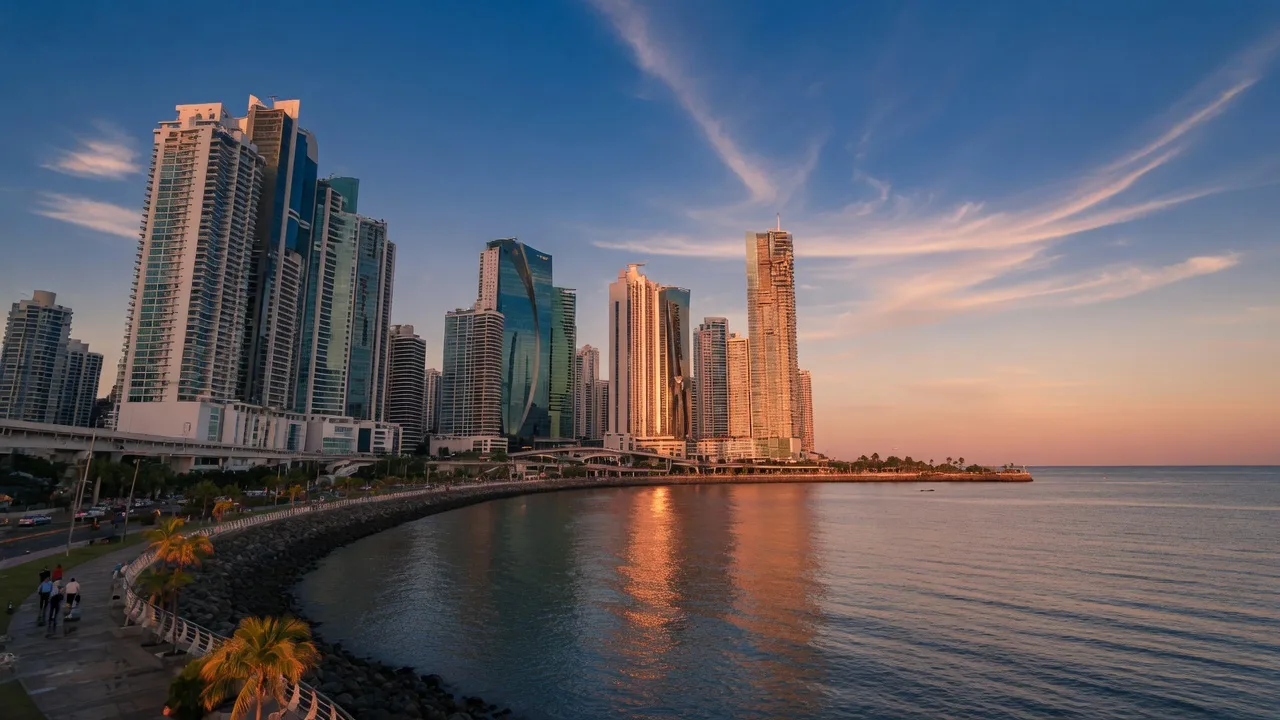
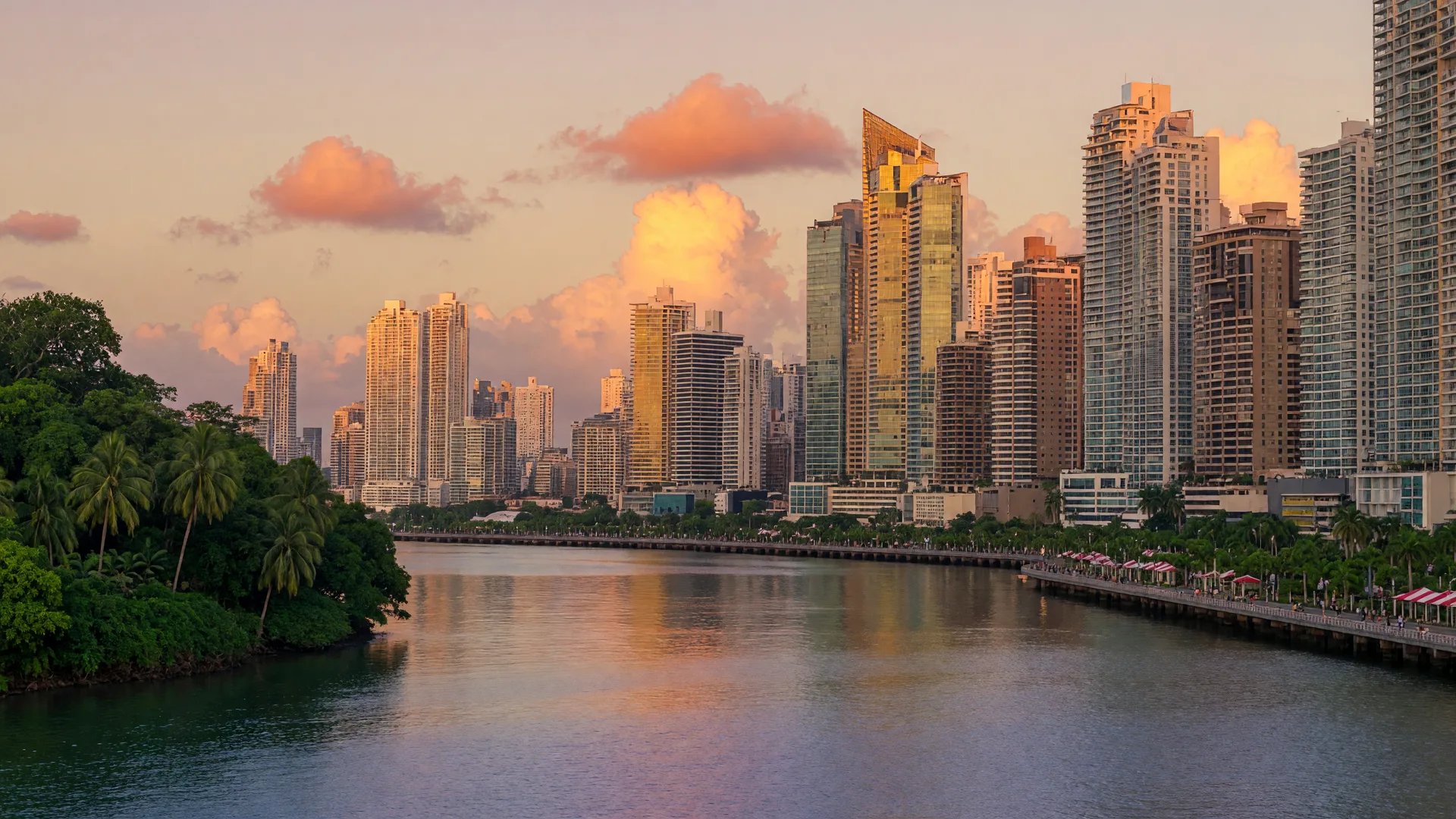
- Punta Pacifica and Costa del Este sit above the threshold. These premium Panama City waterfront districts ask well over US$200,000 entry, so here US$200,000 is a down payment, not a purchase.
- Central Panama City districts such as El Cangrejo, Bella Vista, and San Francisco have older condos that can fall within the US$200,000 range, especially for smaller units.
- The Coronado to San Carlos corridor is the middle ground: US$200,000 is a real, workable budget for many condos and smaller homes in the region's established communities, though the newest oceanfront towers price higher.
- Boquete, El Valle de Antón, and Pedasí are where US$200,000 buys the most for a lifestyle purchase: highland homes with gardens in Boquete, crater-town properties in El Valle, and beach-town houses in the Pedasí area.
Two legal points matter before you commit. First, the property must be free of liens for its value to count toward the US$200,000 threshold. Local bank financing is permitted under Decree 226, but the mortgaged portion does not count, so in practice the property needs to be free and clear, or your equity must cover the threshold on its own. Second, the purchase and the visa are separate processes: your immigration attorney handles the residency file while your real estate attorney handles the title, and the two should coordinate. Our guides to the closing costs and the buying process for foreign buyers walk through the transaction side, and our market guides cover Coronado, Boquete, El Valle, San Carlos, and Punta Pacifica in detail.
Friendly Nations vs Pensionado vs Qualified Investor
The Friendly Nations visa is not the only route, and it is not always the right one. Here is how it compares with the two other programs most relevant to international buyers.
| Aspect | Friendly Nations | Pensionado | Qualified Investor (Decree 17 of 2026) |
|---|---|---|---|
| Qualifying test | US$200,000 real estate, US$200,000 deposit, or employment | Lifetime pension of US$1,000 per month, or US$750 with US$100,000+ property | Investment threshold per Decree 17 of 2026, with separate new-build and resale tiers |
| Minimum age | None | None, but must already receive the pension | None |
| Property requirement | Optional (one of three routes) | Optional (lowers income threshold) | Core requirement |
| Path to permanent residency | 2-year provisional, then convert | Permit granted as indefinite | Permanent residency on approval |
| Best suited to | Working-age buyers, investors, and relocators | Retirees with pension income | Investors committing to Panama's official investment tiers |
Choose based on facts, not marketing. Retirees with a lifetime pension should read our full Pensionado guide first, because that route is cheaper and simpler for that profile. Investors moving larger capital should compare the Qualified Investor rules under Decree 17 of 2026, which changed the property thresholds. Everyone else, including digital nomads and working-age relocators, usually lands on the Friendly Nations visa, and the property route is the version we see most often.
Documents, Costs, and the Step-by-Step Process
The administration of the Friendly Nations visa is well defined, but the document list is long and the timing is tight, which is exactly why attorneys handle it. Here is what you will assemble.
Documents you will need
- A valid passport with at least six months of validity, plus passport photos.
- An apostilled birth certificate, translated into Spanish.
- A criminal background certificate from your country of residence and any country where you lived more than two years in the last five, apostilled, translated, and issued recently.
- A medical certificate issued in Panama, from the local examination.
- Bank certification and proof of funds, demonstrating economic solvency, plus documentation of your qualifying route (the registered title for the property route, the deposit certificate for the deposit route, or the registered employment contract).
- Marriage and children's birth certificates, apostilled and translated, for dependents.
Every foreign document comes with the same warning: apostille it, translate it into Spanish, and keep it inside its validity window, because several certificates expire.
What it costs
| Expense | Typical range |
|---|---|
| SNM migration fee | About US$800 per applicant |
| National Treasury fee | About US$250 per applicant |
| Government fees total | About US$1,050 per applicant, non-refundable |
| Attorney and legal fees | US$2,000 to US$5,000, depending on the firm and family size |
| Apostilles and certified translations | US$300 to US$800 |
| Medical certificate in Panama | US$50 to US$150 |
| Realistic all-in total (excluding the US$200,000) | About US$4,500 to US$8,000 |
These are planning numbers from immigration firms and published guides; fees change, so request a written, itemized quote before engaging anyone. If your route is the property purchase, add the transaction costs on top: legal fees of roughly 1% to 2% of the price, notary and registry costs, and the transfer tax, which sellers usually pay but which is negotiable. Our closing costs guide breaks those down by market.
The timeline, stage by stage
| Stage | Typical duration |
|---|---|
| Document preparation, apostilles, and translations | 2 to 6 weeks |
| Medical exam in Panama | 1 to 2 days |
| SNM application processing | 4 to 6 months (range of 3 to 9 months) |
| Two-year provisional residency granted | On approval |
| Conversion to permanent residency | After 2 years of provisional residence |
| Citizenship eligibility | After 5 years of permanent residency, or 3 if married to a Panamanian or with Panamanian children |
The process, step by step
- Confirm your country is on the eligible list and choose your qualifying route.
- Hire a licensed Panamanian immigration attorney; you cannot file the application yourself.
- Assemble, apostille, and translate your documents using your attorney's checklist.
- Complete the medical examination in Panama.
- Your attorney files the application with the Servicio Nacional de Migración (SNM) and pays the government fees.
- Attend the in-person appointment in Panama City to sign and provide biometric data.
- Receive the two-year provisional residency and, after two years, apply for permanent residency.
Risks and Common Mistakes to Avoid
The Friendly Nations visa is straightforward when it is prepared properly, and most delays come from the same handful of errors.
- Following outdated advice. The old US$5,000 deposit route ended in 2021. Any source describing it is stale, and basing a plan on it wastes time and money.
- Letting documents expire. Criminal records and some certificates are valid only for a limited window; sequence the paperwork so everything lands inside its validity period.
- Skipping the apostille. Panamanian authorities require apostilled foreign documents, and unauthenticated originals stall the file.
- Buying a mortgaged property for the route. The financed portion does not count toward the US$200,000 threshold, so a heavily leveraged purchase may not qualify you.
- Forgetting the economic solvency proof. The US$200,000 route satisfies the investment test, but applicants still document solvency, and dependents add to the expected balance.
- Assuming the visa grants work rights. Unless you use the employment route with its separate permit, the visa does not authorize local employment.
- Budgeting only the government fees. Attorney fees and document legalization dominate the real cost; the US$1,050 government total is the smallest line item.
Do You Need Residency to Buy Property in Panama?
No, and this is the most important clarification for anyone reading this before buying. Foreigners do not need residency to buy property in Panama. The Constitution gives foreigners the same property rights as citizens, and you can buy titled real estate in your own name without any visa or residency status. The exceptions are narrow: foreign individuals generally cannot hold titled land within roughly 10 kilometers of Panama's land borders, and the beach strip of about 22 meters from the high-tide line is public by law under the maritime-terrestrial zone rules.
So treat the Friendly Nations visa as a living decision, not a buying requirement. If you want to relocate, establish banking and a local ID (cédula), reduce friction on residency paperwork later, and have a clear path to permanent status, the visa is valuable. If you simply want to own property and visit, you do not need it, and our guide to buying property as a foreigner covers that path directly.
The Bottom Line: Is the Friendly Nations Visa Right for You?
The Panama Friendly Nations visa is the country's main residency route for working-age international buyers, investors, and relocators, and the real-estate route makes it the most property-friendly residency program for the budgets we work with every day. A US$200,000 purchase is a serious but realistic line in the sand: it clears entry pricing across most of Coronado, San Carlos, Boquete, El Valle, and Pedasí, and it buys a genuine start in central Panama City, even if the premium waterfront districts sit above it.
Pair the decision correctly. Choose the market that fits your lifestyle first, using our honest comparison of the best places to live in Panama, then use the property route as the immigration vehicle for a purchase you wanted anyway. The process completes cleanly when the title is free and clear, the documents are apostilled and fresh, and a licensed attorney manages the file from start to finish.
That is exactly the guidance we give, and when you are ready to get specific about which market and which property fit your numbers, contact us.
Frequently Asked Questions
What is the Panama Friendly Nations visa?
The Friendly Nations visa is a residency permit for citizens of about 51 countries with friendly relations to Panama, created by Executive Decree 343 of 2012 and reformed in August 2021. You qualify through real estate of at least US$200,000, a US$200,000 three-year bank deposit, or a Panamanian employment contract, and you receive a two-year provisional residency first, then permanent residency.
How much do I need to invest for the Friendly Nations visa?
The investment route requires US$200,000, in either titled real estate or a fixed-term bank deposit held for three years. Applicants also document economic solvency, commonly cited by law firms as a bank balance of roughly US$4,000 to US$5,000, plus about US$2,000 per dependent.
Can buying property in Panama qualify me for the Friendly Nations visa?
Yes. Titled property with a registered value of at least US$200,000, free of liens, in your name or through a Panamanian company where you are the ultimate beneficiary, qualifies you for the visa. Local financing is permitted, but the mortgaged portion does not count toward the threshold, so the property must effectively be free and clear.
How long does the Friendly Nations visa process take?
Plan on about 4 to 6 months for the two-year provisional residency, with a realistic range of 3 to 9 months depending on your file. After two years of provisional residence you convert to permanent residency, and citizenship becomes possible after five years of permanent residency.
How much does the Friendly Nations visa cost?
Government fees are about US$1,050 per applicant (roughly US$800 to the migration service and US$250 to the treasury), non-refundable. With attorney fees, apostilles, translations, and the medical exam, the realistic all-in total runs about US$4,500 to US$8,000, before the US$200,000 investment itself.
Can I work in Panama with a Friendly Nations visa?
Only if you qualify through the employment route. That route requires a contract registered with MITRADEL and a separate work permit. If you qualify through property or deposit, the visa does not grant the right to local employment.
Which countries qualify for the Friendly Nations visa?
The list includes about 51 countries: the United States, Canada, the United Kingdom, Australia, and most EU states, among others. Ecuador was added in September 2026. Your attorney should confirm the current list at the time you apply, because it has changed over time and is expected to keep evolving.
Do I need residency to buy property in Panama?
No. Foreigners have the same property rights as citizens and can buy titled real estate without any visa or residency status. Residency is a living and long-term planning decision, not a purchase requirement, with narrow exceptions for border zones and the public beach strip.
Ready to Plan Your Panama Move?
We know Panama, and we know the difference between the market that looks right on paper and the one that fits your life. Whether you are comparing Panama City, Coronado, Boquete, or El Valle, we will give you the good, the bad, and the reality, and we will connect you with the licensed immigration attorneys your Friendly Nations application needs. Call or WhatsApp us at +507-6356-7777, or email info@panamapropertyexperts.com. No pressure, just good information.
Sources and References
- Servicio Nacional de Migración (SNM), official portal
- Kraemer & Kraemer, Panama Friendly Nations Visa: 51 Qualifying Countries
- Lawzana, Panama Friendly Nations Visa 2026: Investment, Deposit & Work Routes
- R&F Legal (Relofirm), Panama Friendly Nations Visa Requirements and Country List
- ExpatDen, Panama Friendly Nations Visa: Requirements and How to Apply in 2026
- Global Citizen Solutions, Panama Friendly Nations Visa Guide
- TaxoPilot, Panama Friendly Nations Visa and Territorial Tax 2026
- NDM Law, Friendly Nations Visa Guide for Applicants
- Julisa Jaramillo Law Offices, Immigration reforms in Panama 2025
Last verified November 9, 2026. This article is general information, not legal, tax, or immigration advice.