Quick Answer
Yes, the Panama Pensionado visa is the country's main residency route for retirees, and it is one of the most accessible in the region. You qualify with a guaranteed lifetime pension of at least US$1,000 per month, or US$750 per month if you buy Panama residential property worth at least US$100,000 in your own name. There is no minimum age, no investment fund requirement, and no work test.
Key Takeaways
- The Panama Pensionado visa requires a guaranteed lifetime pension of at least US$1,000 per month, plus about US$250 per month for each dependent.
- Buying Panamanian residential real estate in your own name worth at least US$100,000 lowers the income threshold to US$750 per month.
- There is no minimum age, so early retirees and semi-retirees can qualify if their pension is documented as guaranteed for life.
- The permit is indefinite and does not require renewal or extension filings.
- A licensed Panamanian immigration attorney is required to file; processing typically takes 3 to 6 months.
- The realistic all-in cost for a single applicant is about US$3,800 to US$5,800, including attorney fees, government fees, and documents.
- Once approved, the Pensionado credential unlocks legally established discounts on healthcare, flights, restaurants, hotels, entertainment, and utilities.
Disclaimer: this article is general information, not legal, tax, or immigration advice. Laws, income thresholds, fees, and discount percentages change. Verify current requirements with the Servicio Nacional de Migración and a qualified Panama immigration attorney before acting.
What Is the Panama Pensionado Visa?
The Panama Pensionado visa is an indefinite residency permit for people who receive a guaranteed lifetime pension. It was created by Decree Law 3 of 2008, building on the retiree incentives first introduced by Law 6 of 1987, and it is administered by the Servicio Nacional de Migración (SNM). For most international retirees, this is the single most relevant residency pathway in Panama.
The idea behind the program is straightforward: Panama wants retirees with stable foreign income to spend their retirement years here, and it makes residency genuinely easy in exchange. There is no minimum age, no minimum stay before you qualify, no business to register, and no money to lock into an investment fund. You document a qualifying pension, pass background and medical checks, and you receive a permanent-style permit that never needs renewal.
It is not the only route. The Friendly Nations visa and the Qualified Investor program under Decree 17 of 2026 serve different profiles, and the digital nomad visa suits remote workers rather than pensioners. But if your situation is built on a pension, the Pensionado visa is usually the right first question.
Who Qualifies: Income, Age, and Pension Rules
The qualification test rests on one requirement: a guaranteed lifetime pension of at least US$1,000 per month from a government agency, an international organization, or a regulated private company. In practice, US Social Security qualifies, Canada Pension Plan (CPP) and Old Age Security (OAS) both qualify and can be combined to reach the threshold, and many company, military, and union pensions qualify if the payer confirms the pension is permanent.
| Requirement | Standard route | Property route |
|---|---|---|
| Monthly pension income | US$1,000 minimum | US$750 minimum |
| Property purchase | Not required | Residential real estate of at least US$100,000 registered value, in your own name |
| Each dependent | +US$250 per month | +US$250 per month |
| Minimum age | None (18 or older and actually receiving the pension) | Same |
Dependents are typically a spouse and children under 25 who are studying. Expect about US$250 per month of additional pension income per dependent.
Two points people miss. First, the pension must be guaranteed for life; a lump sum, a 401(k) balance, or an investment account does not qualify. Second, there is no minimum age, but you must be actually receiving the pension when you apply. Early retirees collecting a lifetime pension qualify. Working-age people without stable pension income do not, which is where the other visa categories enter the picture.
The US$750 Property Route: How Buying Real Estate Lowers the Bar
Here is where the Pensionado program connects directly with buying property in Panama. If you purchase Panamanian residential real estate in your own name with a registered value of at least US$100,000, the pension threshold drops from US$1,000 to US$750 per month. The purchase is entirely optional. It exists for retirees who want a permanent base in Panama anyway, and it has a real effect on your monthly income requirement.
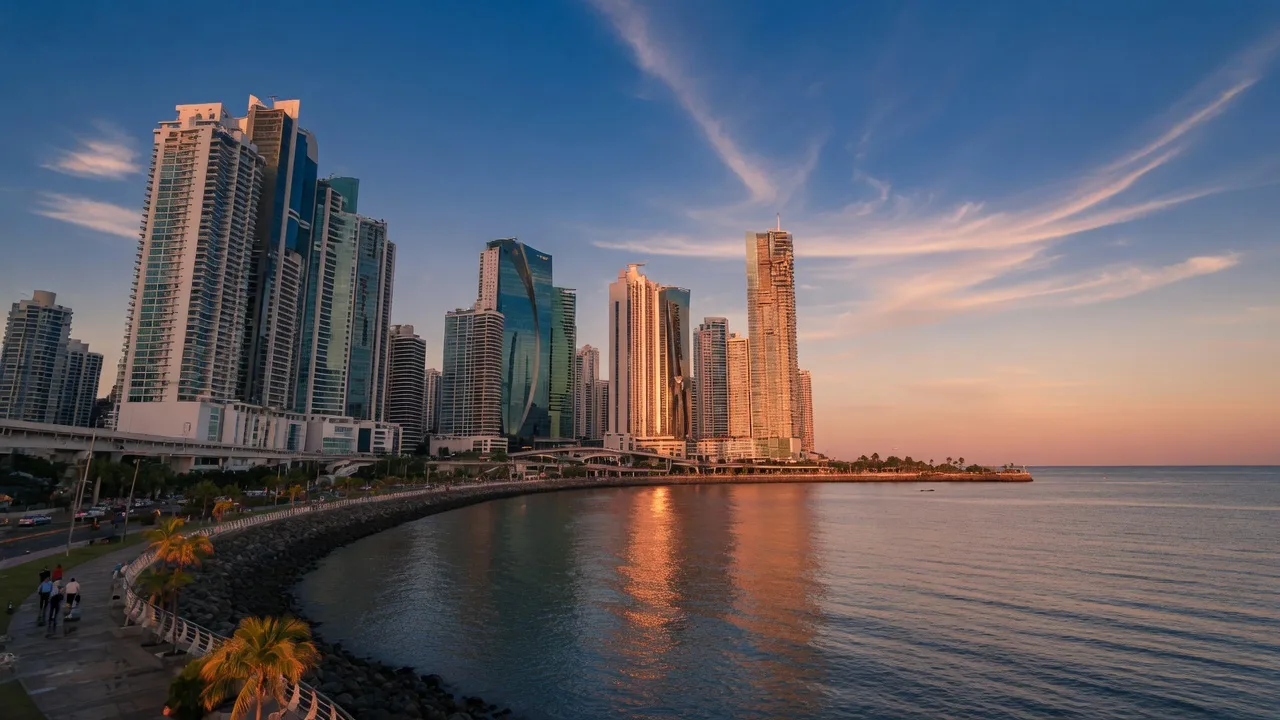
In the markets we know best, US$100,000 sits well below typical entry prices, so the route is realistic across most of the country: a condo in Panama City's Punta Pacifica or Costa del Este, a beach-community home in the Coronado to San Carlos corridor, a highland house in Boquete, or a mountain home in El Valle de Antón will almost always clear the mark. Here is the honest comparison.
| Aspect | Standard route (US$1,000) | Property route (US$750) |
|---|---|---|
| Pension income required | US$1,000 per month | US$750 per month |
| Property purchase | Optional | Required, at least US$100,000 in your name |
| Cash beyond fees | None | US$100,000 plus closing costs (plan on 3% to 4%) |
| Best suited to | Retirees with strong pension income | Buyers who want a permanent base in Panama |
| Main risk | None added | Property must remain registered in your name; ownership carries its own duties |
Separate the two decisions: whether Panama is the right market for you, and whether to use the property route. We help with the first through our Boquete, Coronado, El Valle, and Panama City location guides, and our guide to closing costs covers the second. Note that the property must be in your own name, and your immigration attorney should confirm exactly how the purchase is documented for migration purposes.
Required Documents: What You Need to Assemble
- A valid passport with at least six months of validity.
- A pension certificate from the paying agency, issued recently, apostilled, and translated into Spanish, stating that the pension is permanent, guaranteed for life, and its monthly amount.
- A criminal background certificate from your country of residence and from any country where you lived more than two years in the last five, apostilled and issued within the last six months.
- Your birth certificate and, if married, your marriage certificate, apostilled and translated.
- A medical certificate issued in Panama; the examination is done locally.
- A sworn declaration and the application forms prepared by your attorney.
- If you use the property route, the registered title certificate for the property.
Timing matters because several certificates expire. Your attorney will sequence the paperwork so nothing lands outside its validity window, and the criminal record in particular is accepted only for a limited period.
The Application Process, Step by Step
- Hire a licensed Panamanian immigration attorney. A local attorney is required to file; you cannot submit the application yourself.
- Assemble, apostille, and translate your documents with your attorney's checklist.
- Complete the medical examination in Panama.
- Your attorney prepares and files the application with the Servicio Nacional de Migración.
- Attend the in-person appointment in Panama City to sign and provide biometric data.
- Wait for approval; processing typically takes 3 to 6 months.
- Receive your residency cédula, the national ID card, and then register for the Pensionado credential that carries the discounts.
| Stage | Typical duration |
|---|---|
| Document preparation and apostilles | 2 to 6 weeks |
| Medical exam in Panama | 1 to 2 days |
| SNM application processing | 3 to 6 months |
| Cédula and Pensionado credential | 2 to 4 weeks after approval |
| Full end-to-end | Roughly 4 to 8 months; complex cases can approach 10 |
Simple single applications often move faster, and complex ones, such as several dependents or nonstandard pension documentation, can take longer. Plan your move around the timeline rather than against it.
What It Costs: A Realistic Budget
There is no single official price list, and published figures vary by firm, so treat these as planning numbers, the range reputable immigration firms quote in 2026. Always request a written, itemized quote before engaging anyone.
| Expense | Typical range |
|---|---|
| Government application and migration fees | US$300 to US$1,050 |
| Repatriation (migration) deposit | About US$800 per person, partially refundable |
| Attorney and legal fees | US$1,000 to US$3,000 |
| Apostilles and certified translations | US$300 to US$600 |
| Medical certificate in Panama | US$50 to US$150 |
| Cédula and Pensionado card | About US$50 to US$60 |
| Realistic all-in total, single applicant | About US$3,800 to US$5,800 |
If you buy property for the US$750 route, add the purchase costs on top: legal fees of about 1% to 2% of the price, notary and registry fees, and the 2% transfer tax (ITBI), which sellers usually pay but which is negotiable. Our closing costs guide runs those numbers for Panama City, Coronado, Boquete, and El Valle.
Benefits and Discounts of the Pensionado Card
Once the permit is granted, you receive the credentials that carry the program's famous discounts. They are real and established in law, and they apply at participating businesses, usually when you present the card and, in some categories, when you pay by card or check rather than cash.
| Category | Typical discount |
|---|---|
| Medical consultations and specialist visits | 20% until 2 May 2027, then 25% under Law 562 of 2026 |
| Prescription medications | 10% until 2 May 2027, then 20% under Law 562 of 2026 |
| Hospital, clinic, and laboratory services | 15% |
| Dental and vision care | 15% |
| Flights on Panamanian airlines, such as Copa | 25% on the base fare |
| Restaurants, up to a party of eight | 25% |
| Hotels, Monday to Thursday / Friday to Sunday | 50% / 30% |
| Entertainment: cinema, theater, concerts, sports | 50% |
| Public buses, boats, and trains | 30% |
| Panama City Metro | 50% |
| Electricity, water, and telephone bills | 25% |
| National parks and museums | 50% |
| One-time duty-free import of household goods | Up to US$10,000 |
| Duty-free vehicle import | Every two years |
Recent change (November 9, 2026): Law 562 of November 2, 2026 (Gaceta Oficial No. 30647) amends Panama's retiree-benefits law (Law 6 of 1987). From May 2, 2027, the prescription-medicine discount rises to 20%, general and specialist consultations get a 25% discount, cancer care gets a 30% discount, mobility equipment gets a 20% discount, and residential internet or cable contracts up to B/.50 per month get a 20% discount. Until that date the earlier rates apply. The law does not change the Pensionado visa's income threshold, dependent rules, or fees.
Do not rely on third-party lists for precise percentages; verify the current rates and conditions with SNM or your attorney, because the terms change and some categories require specific payment methods. For the medical side, our guide to healthcare in Panama for expats goes deeper.
Common Mistakes and Risks to Avoid
- Assuming any money qualifies as a pension. A lump sum, an IRA balance, or rental income does not. The payer must certify a guaranteed lifetime pension.
- Skipping the apostille. Panamanian authorities require apostilled foreign documents, and unauthenticated originals cause delays.
- Letting documents expire. Criminal records age out quickly, so sequence your paperwork to land inside every validity window.
- Using the property route without understanding ownership duties. If the property is not kept in your name, you may lose the reduced threshold.
- Ignoring absence rules. Some sources describe an absence of two consecutive years as affecting the permit; confirm the current rule with your attorney before planning long trips.
- Budgeting only the application fee. Attorney fees and the migration deposit dominate the real cost.
- Trusting the seller's lawyer or a single all-inclusive quote. Your own independent attorney and an itemized written quote are nonnegotiable.
The Bottom Line: Start with the Right Questions
The Panama Pensionado visa is the country's most accessible residency route for retirees, and for most people with a guaranteed lifetime pension it is the right answer to the question "How do I retire in Panama?" It pairs a low income threshold, no minimum age, an indefinite permit, and genuinely useful discounts with a process that completes cleanly when the documents are prepared properly.
Be just as honest about the other side. Without a lifetime pension, this route is not for you, and the Friendly Nations or Qualified Investor categories deserve a closer look. If you plan to earn income locally, confirm what the permit allows. And if you use the property route, buy well, in a market that fits your lifestyle, not just to reach a number.
That is exactly the advice we give. Compare the markets, understand the process, and get an immigration attorney and a real estate advisor on your side before you commit. Start with our honest guide to retiring in Panama and our comparison of Panama versus Costa Rica, then call us when you are ready to get specific.
Frequently Asked Questions
What is the Panama Pensionado visa?
The Panama Pensionado visa is an indefinite residency permit for people with a guaranteed lifetime pension of at least US$1,000 per month. It was created by Decree Law 3 of 2008, has no minimum age, never needs renewal, and brings a package of legally established discounts once the card is issued.
Can Americans retire in Panama with Social Security?
Yes. US Social Security is one of the most common qualifying pensions. You need a guaranteed monthly benefit of at least US$1,000, or US$750 if you own Panamanian residential property worth at least US$100,000. The official benefit letter stating the pension is permanent is the key document.
Can Canadians qualify for the Pensionado visa?
Yes. Canada Pension Plan (CPP) and Old Age Security (OAS) both qualify, and Canadians commonly combine them to reach the US$1,000 monthly threshold. As with all applicants, the pension must be documented as guaranteed for life, and each dependent adds about US$250 per month.
Is there a minimum age for the Pensionado visa?
There is no minimum or maximum retirement age. You must be at least 18 and actually receiving the qualifying pension when you apply. Early retirees with a lifetime pension qualify; people without stable pension income should consider categories such as Friendly Nations or the Qualified Investor program.
Do I have to buy property to get the Pensionado visa?
No. Property is optional. The standard route requires only the US$1,000 monthly pension. If you buy residential real estate in your own name worth at least US$100,000, the threshold drops to US$750 per month, which is why many retirees combine the visa with a home purchase they wanted anyway.
How long does the Pensionado visa process take?
Plan on 3 to 6 months of government processing after submission, and roughly 4 to 8 months end to end. Simple single applications can move faster, while multiple dependents or complex pension documentation can push the full process toward 10 months.
How much does the Pensionado visa cost?
Published 2026 estimates for a single applicant run from about US$3,800 to US$5,800 all-in, covering attorney fees (US$1,000 to US$3,000), government fees, the migration deposit, apostilles, translations, and the local medical exam. Always ask for an itemized written quote from a licensed firm.
Can I work in Panama with a Pensionado visa?
The program is designed around passive pension income, not local employment. If you plan to earn income in Panama, confirm the exact rules with your immigration attorney, because the Pensionado permit's structure assumes your income comes from abroad.
Ready to Plan Your Panama Retirement?
We know Panama, and we know the difference between the market that looks right on paper and the one that fits your life. Whether you are comparing Punta Pacifica, Coronado, Boquete, or El Valle, we will give you the good, the bad, and the reality, and connect you with the licensed attorneys your Pensionado application needs. Call or WhatsApp us at +507-6356-7777, or email info@panamapropertyexperts.com. No pressure, just good information.
Sources and References
- Servicio Nacional de Migración (SNM), official portal
- Embassy of Panama, Retire in Panama
- Kraemer & Kraemer, Panama Retiree and Pensioner Visa
- Harvey Law Corporation, Panama Pensionado Program
- Privacy Solutions, Panama Pensionado Visa
- Mirabello Consultancy, Panama Pensionado Visa Guide
- Inside Panama, Pensionado Visa Guide
- Compass Abroad, Panama Pensionado Visa for Canadians
Last verified November 9, 2026. This article is general information, not legal, tax, or immigration advice.