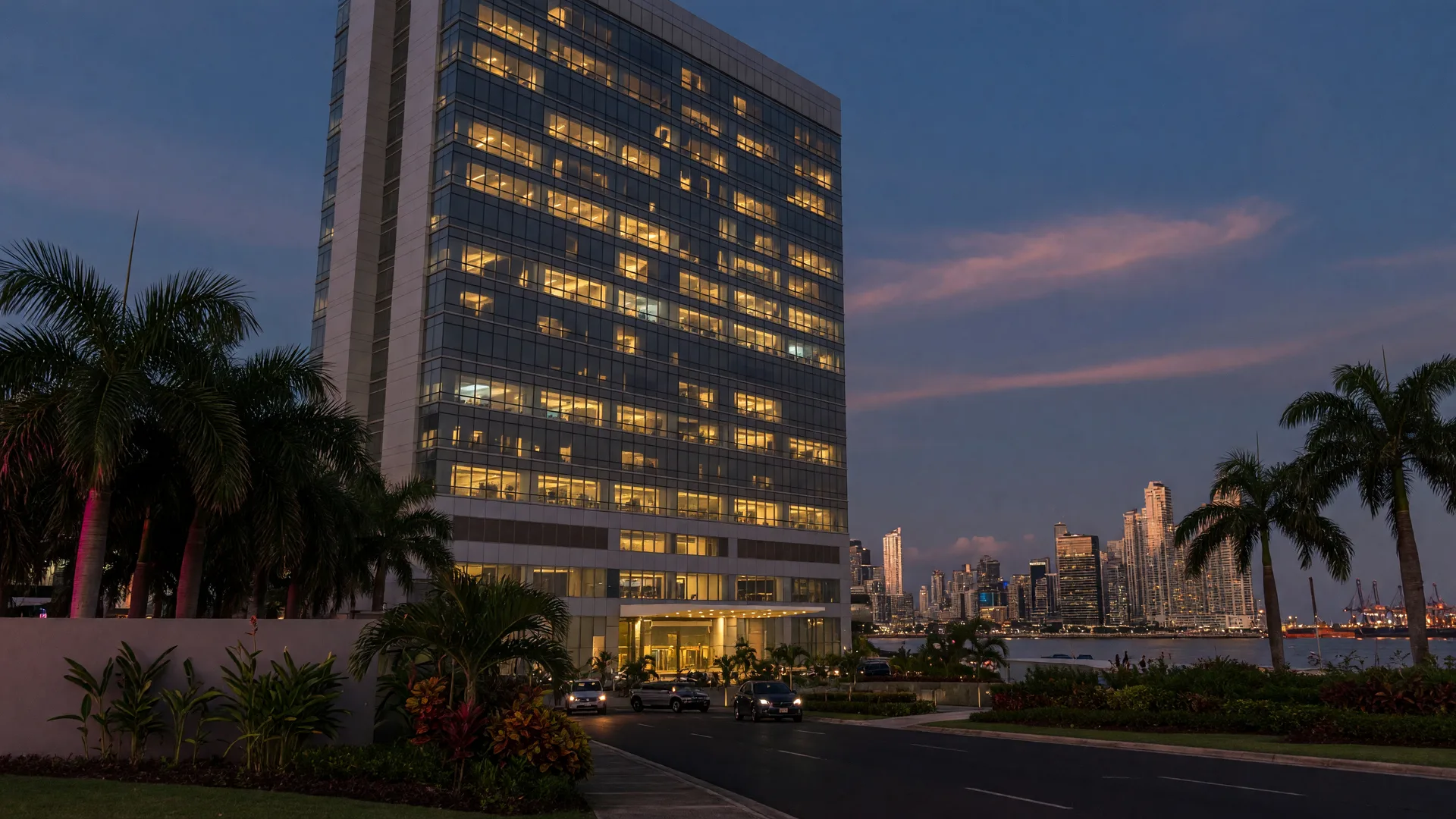
Quick Answer
Yes, healthcare in Panama is genuinely good where it is concentrated, and it costs a fraction of North American prices. A private general consultation runs about $40 to $80, local insurance can start near $50 a month, and voluntary public CSS coverage costs roughly $80 to $110 a month. The real work is choosing the right mix of insurance, hospital, and location for your age and needs.
Key Takeaways
- Panama runs two parallel systems: the public CSS and MINSA networks, and a private sector that most international residents use for day-to-day care.
- Typical private prices are $40 to $80 for a general consultation, $80 to $150 for a specialist, and $100 to $300 for an emergency-room visit; routine care commonly costs 60% to 80% less than comparable US prices.
- Local Panamanian insurance plans for a healthy adult run about $50 to $150 a month, with premiums rising with age; many carriers stop accepting new applicants around 65.
- International expat plans (Cigna Global, Allianz Care, Aetna, IMG) typically cost $150 to $400 a month at age 50, and roughly double if US coverage is included.
- The Pensionado visa guarantees medical discounts under Law 6 of 1987: 20% off consultations, 15% off uninsured hospital bills, 15% off dental and optical care, and 10% to 20% off pharmacy.
- Private hospitals in Panama City, led by Pacífica Salud (Hospital Punta Pacífica), hold international accreditation; specialist care thins quickly outside the capital.
- Plan healthcare before you move: Panama City has the widest choice of hospitals and specialists, while beach, mountain, and island towns depend on travel for complex care.
By Chad Ratcliffe, reviewed by the Panama Property Experts Editorial Team. Chad Ratcliffe is a licensed real estate broker with over 10 years of experience in the Panamanian property market. Based in Panama City, he specializes in helping international buyers, investors, and retirees navigate the purchase process across all major Panama markets.
This guide is for information only and is not medical, insurance, financial, or legal advice. Premiums, fees, laws, and discounts change over time and vary by age, health, provider, and plan. Always confirm current terms with insurers, hospitals, the Caja de Seguro Social, and a qualified Panama immigration attorney before you rely on them.
How Much Does Healthcare in Panama Cost for Expats?
The honest headline is that healthcare in Panama for expats is far more affordable than in most of North America and Europe, and the quality is very good where the system is concentrated. Routine private care typically costs 60% to 80% less than comparable care in the United States, and even a serious private hospital stay costs a fraction of a US one. The catch is geographic: the best hospitals and specialists sit in Panama City, and access narrows the farther you live from it.
This guide walks through the real 2026 figures: consultation and hospital prices, insurance premiums at different ages, how the public system works, the discounts the Pensionado visa guarantees, and how healthcare should shape your choice of where to live in Panama. The ranges below come from published expatriate guides, insurer data, and hospital pricing; your exact costs will depend on your age, health, and plan.
| Private medical service, Panama City (2026) | Typical price | Notes |
|---|---|---|
| General practitioner consultation | $40 to $80 | Some clinics start near $30 |
| Specialist consultation | $80 to $150 | Cardiology, dermatology, gynecology fall in this range |
| Emergency room visit | $100 to $300 | Before procedures or tests |
| Basic blood panel | $30 to $100 | Standard laboratory work |
| X-ray | $20 to $50 | Single view |
| CT scan | $150 to $300 | Per region |
| MRI | $200 to $600 | Per region |
| Major surgery or multi-day hospital stay | $10,000 to $40,000 and up | Ranges widely by procedure; still far below comparable US billing |
Put those numbers next to US prices and the difference is obvious. A specialist visit that costs $150 in Panama commonly bills $300 to $600 in the United States, and a private hospital stay that runs $20,000 in Panama can easily reach six figures in a US system. That gap is one of the main reasons so many North American retirees choose Panama, and it is the same reason sensible planning matters: the savings only materialize if you can actually access the care you need.
Two Systems: Public Care and the Private Sector
Panama does not have one healthcare system; it has two, and knowing which one you are in changes everything about cost and wait times. The public side is run by the Caja de Seguro Social (CSS) and, through a separate network, by the Ministry of Health (MINSA). CSS is the social security health system, funded by payroll contributions, and it covers roughly 80% of the population. The private side is a growing sector of clinics and hospitals, centered on Panama City, where most international residents actually receive their care.
If you work for a Panamanian employer, you are enrolled in CSS automatically and your contributions are deducted from salary. If you are a legal resident who is not employed, including most retirees, you can still join voluntarily. Foreign residents fall under Group B.2 of the CSS affiliation rules, and the process runs through the CSS online portal at tramites.css.gob.pa or through Panamá Digital. You declare a monthly income, commonly around $500, and you pay roughly 17.86% of that declared base, which works out to about $80 to $110 a month at the $500 minimum. In return you get access to the CSS network: public hospitals like Santo Tomás, polyclinics, laboratories, and pharmacy, with small copays of about $1.50 to $5 per visit.
CSS went through a major financial reform in 2025: Law 462 of March 18, 2025 created a Unified Solidarity Fund for the pension side and adjusted contribution rules, but it kept voluntary enrollment for foreign residents intact. The realistic caveat is that the public system is public: wait times are longer, infrastructure varies from facility to facility, and coverage is limited to its own network. Most expats treat CSS as a useful safety net or skip it entirely and rely on private care, which is exactly why the private numbers in this guide matter.
Panama's Leading Private Hospitals for Expats
Panama City holds the country's highest concentration of internationally accredited private hospitals, and one name stands above the rest for international patients. Pacífica Salud, operating the Hospital Punta Pacífica in the Punta Pacífica district near Multiplaza Mall, is affiliated with Johns Hopkins Medicine International and is JCI accredited, the international hospital accreditation standard. English is spoken throughout, and it is the hospital most expatriate guides recommend first for complex or urgent care.
It is not the only serious option. Hospital Nacional on the Vía España corridor is a large, long-established full-service private hospital, and Clínica Hospital San Fernando, also from Vía España, is another full-service choice with strong multi-specialty care. Hospital Paitilla, near the waterfront, is a long-standing private hospital popular with international residents. On the public side, Hospital Santo Tomás is the largest public hospital in the country and anchors the state system in the capital.
| Hospital | Location | What to know |
|---|---|---|
| Pacífica Salud (Hospital Punta Pacífica) | Punta Pacífica, near Multiplaza Mall | Johns Hopkins Medicine International affiliation; JCI accredited; strong English; the first stop for most expat guides |
| Hospital Nacional | Vía España / San Francisco area | Large full-service private hospital with multi-specialty care |
| Clínica Hospital San Fernando | Vía España | Established full-service private hospital |
| Hospital Paitilla | Paitilla waterfront | Long-standing private hospital; popular with international residents |
| Hospital Santo Tomás | Central Panama City | Largest public hospital; part of the CSS / state network; budget option for residents of the public system |
Outside the capital the picture changes. David, capital of Chiriquí province, is the major regional medical center for western Panama, and hospitals there cover most needs of residents in Boquete and the highlands. In Coronado and the Pacific beach corridor you find local clinics and some private clinics, but complex care means a trip of roughly 1.5 hours to Panama City. In Bocas del Toro and the more remote islands, facilities are limited and serious cases require evacuation by air or sea. Your address in Panama is very much your healthcare plan.
Health Insurance in Panama: Local Plans vs International Plans
Health insurance in Panama is optional for most people but strongly recommended, and you have two broad families of plans. Local Panamanian plans from carriers such as ASSA, MAPFRE, SURA, Family Medical, and Banistmo Health are the cheapest route: about $50 to $150 a month for a single healthy adult, with premiums that rise with age. One local carrier's advertised bands give a useful picture: roughly $52 a month for ages 30 to 39, $71 for 40 to 49, $94 for 50 to 59, $117 for 60 to 69, and $146 for 70 to 79. The trade-off is that coverage is essentially Panama-based, and many local insurers will not accept new applicants over 65.
International expat plans from Cigna Global, Allianz Care, Aetna, IMG, and similar carriers offer broader geographic coverage and generally accept older applicants, and you pay for it. Typical premiums for a 50-year-old run $150 to $400 a month, with the full range from $100 to $500 depending on limits and deductibles, and a family of four commonly pays $400 to $900 a month. Adding US coverage is the single biggest price driver: as a general rule it roughly doubles the premium, which is why snowbirds who split the year need to think carefully about where they want treatment to happen.
| Aspect | Local Panamanian plan | International expat plan |
|---|---|---|
| Typical monthly premium, single healthy adult | $50 to $150 | $100 to $500; $150 to $400 typical at age 50 |
| Age acceptance | Many carriers stop new applicants above 65 | Accepts older ages on many plans, with rising premiums |
| Coverage area | Panama-based, with some regional options | Global, with the option to include the US (premium roughly doubles) |
| Typical carriers | ASSA, MAPFRE, SURA, Family Medical, Banistmo Health | Cigna Global, Allianz Care, Aetna, IMG, Blue Cross Blue Shield |
| Best for | Full-time residents who will treat in Panama | Frequent travelers, snowbirds, and split-time residents |
Two realities shape every buying decision. First, pre-existing conditions are usually excluded, limited, or surcharged, so the best time to buy is while you are healthy and young enough. Second, age is the quiet disqualifier: some local insurers cap new enrollment at 65 and international plans often stop at 75, so waiting until you need care is exactly the wrong strategy. Read the exclusions, check the hospital network in the region where you plan to live, and ask whether the plan pays private hospitals directly or reimburses you.
The Pensionado Visa Cuts Your Medical Costs
Panama's retiree program is not only a residency route; it is a discount card for life in Panama. The Pensionado visa is an income-based permanent residency for people with a guaranteed-for-life pension of at least $1,000 a month, a figure that drops to $750 a month if you buy Panamanian real estate worth at least $100,000, plus $250 a month of pension income per dependent. There is no investment requirement for the visa itself, approval grants permanent residency from day one, and processing typically takes 3 to 6 months. For the retirement picture around it, see our complete guide to retiring in Panama.
The medical side comes from Law 6 of 1987, and the discounts are enforced by ACODECO, Panama's consumer protection agency. You show your Pensionado card when you pay and receive the reduction by law. As of October 2026 the applicable discounts are:
| Service | Pensionado discount |
|---|---|
| Private medical consultations, general and specialist | 20% off |
| Private hospital and clinic bills, when uninsured | 15% off |
| Dental and optical (optometry) care | 15% off |
| Prescription medicines at pharmacies | 10% to 20% off |
| Technical and professional services | 20% off |
Worth watching: in August 2026 the National Assembly passed a bill in third debate to raise the pharmacy discount to 30%, and in late October 2026 a proposal to raise consultation discounts to 25% cleared its first debate. Neither is in force yet, and rates can shift, so confirm the current percentages with ACODECO before you rely on a number. The pensionado program is one reason expatriate guides consistently rank Panama among the most affordable retirement destinations for medical care, alongside the honest Panama vs Costa Rica comparison.
Where You Live Decides What "Good Healthcare" Means
Ask any resident and the answer is the same: healthcare in Panama is a geography question before it is a quality question. Panama City is the only market with the full range of accredited private hospitals and specialists. As you move to the Pacific beaches, the highlands, or the islands, routine care stays accessible, but complex care starts to require travel, and your planning has to account for that distance.
| Region | Typical local care | Complex care |
|---|---|---|
| Panama City | Full private hospitals, accredited options, all specialties | Available locally |
| Coronado and the Pacific beaches | Local clinics and some private clinics in the corridor | Panama City, about 1.5 hours by road |
| Boquete and the highlands | Clinics and a small community hospital | David, 45 to 60 minutes; further for advanced care |
| Volcán and rural Chiriquí | Basic health posts and clinics | David, roughly 1 to 1.5 hours by road |
| David | Major regional hospital center | David itself; Panama City by air |
| El Valle de Antón | Basic local services | Panama City, about 2 hours by road |
| Bocas del Toro and the islands | Small island clinics | Mainland or Panama City, by boat and air |
This table is the reason we pair every property search with a lifestyle conversation at Panama Property Experts. A couple in their late 60s with ongoing specialist needs may be better served by Panama City or a beach community within reach of it, while a self-sufficient couple in good health can thrive in Boquete or Coronado with a solid local clinic and a clear plan for David or the capital. The best places to live in Panama guide covers this trade-off in depth, and our cost of living guide adds the healthcare line to the monthly budget.
Residency, Insurance, and the Health Certificate
If you plan to apply for residency, sort out the medical paperwork before you file. Every main residency application in Panama requires a health certificate (certificado de salud) issued by a licensed Panamanian physician, generally obtained in Panama within about 90 days of filing, at a cost of roughly $50 to $100. It is a quick check, not a bank of blood tests, but it is mandatory and the timing is strict.
Insurance requirements differ by visa, and the difference matters. The Pensionado visa does not legally require health insurance, though it is strongly recommended. The Qualified Investor visa, by contrast, lists proof of private health insurance with coverage in Panama among the required documents; the real-estate route currently requires $300,000 for a new first-sale property or $500,000 for resale under Executive Decree 17 of 2026, which we explain in detail in our guide to the Qualified Investor visa. The digital nomad visa and other categories have their own rules, which shift, so verify the current document list with a licensed immigration attorney before filing. We are real estate brokers, not immigration lawyers, and for any visa question we connect clients with independent professionals we trust.
Risks, Limitations, and Common Mistakes
Balanced planning means naming what can go wrong. The most common expat mistakes I see are not unique to Panama; they are universal errors made in an unfamiliar system. First, waiting to buy insurance until you need it: age caps on local plans and exclusion of pre-existing conditions turn this into the costliest mistake in the list. Second, assuming one insurance plan covers every region: a plan built around Panama City specialists may not include the clinic in your beach town, so verify the network against your actual address.
Third, underestimating distance. If you choose Bocas del Toro or a remote part of the Azuero, you are choosing limited local facilities and evacuation logistics, not a problem, but a fact you must plan around. Fourth, ignoring the public system's limitations: CSS coverage is confined to its own network, where wait times and infrastructure vary; it is a safety net, not a concierge service. Fifth, the language assumption: Panama City's private hospitals are comfortably bilingual, but in smaller towns English is much less certain, so bring written lists of your medications and allergies and confirm the language before you need care, not after.
Finally, letting healthcare quality claims fill the role of due diligence. Accreditation such as JCI is a concrete, checkable fact; marketing language is not. Ask which hospital the plan uses, whether the facility is accredited, and how emergency evacuation works from your chosen area. Those four answers tell you more than any brochure.
The Bottom Line: Budget for Healthcare Like You Budget for the Move
Healthcare in Panama for expats is affordable, high-quality where it counts, and predictably geographic, and a small amount of planning converts the low prices into genuine savings. For most international residents the 2026 budget looks like this: $50 to $150 a month for a local plan or $150 to $400 for international coverage, $40 to $80 per general visit as the out-of-pocket reality, Pensionado discounts as a permanent 15% to 20% reduction, and a health certificate of about $50 to $100 as the one-time residency cost.
The decision sequence I recommend to every client is the same one we use when comparing markets: define your healthcare needs first, then choose the region that meets them, then buy the plan, then the property. Start with our retirement guide for the full picture, use the cost of living guide to budget, and consider the Panama vs Costa Rica comparison if you are weighing countries. When you know the market, we will help you find the right property in the right location, and we will tell you honestly when an area does not fit your healthcare needs.
Frequently Asked Questions
Is healthcare in Panama good for expats?
Yes, in the places where it is concentrated. Panama City has internationally accredited private hospitals, including Johns Hopkins-affiliated Pacífica Salud, with English-speaking staff, and David is a strong regional center for western Panama. In smaller beach, mountain, and island towns care is available but thinner, and complex treatment usually requires travel. Choose your location with that geography in mind.
How much does health insurance cost in Panama for expats?
Local Panamanian plans for a healthy single adult run about $50 to $150 a month, with premiums rising by age band and many carriers not accepting new applicants over 65. International expat plans typically cost $150 to $400 a month at age 50, or $400 to $900 for a family of four, and roughly double if US coverage is included.
Can expats use the public healthcare system in Panama?
Yes. Legal residents who are not employed can enroll voluntarily in the CSS, declaring a monthly income commonly around $500 and paying roughly 17.86% of it, about $80 to $110 a month, for access to the public network with small copays. Coverage is limited to CSS facilities, where wait times and infrastructure vary, so most expats combine it with private care or skip it.
Do I need health insurance to get a Panama residency visa?
It depends on the visa. The Pensionado visa does not require health insurance by law, though it is recommended. The Qualified Investor visa includes proof of private health insurance covering Panama among its required documents. Every residency application requires a health certificate from a licensed Panamanian physician, usually within about 90 days of filing.
Which hospitals do expats use in Panama City?
Most guides start with Pacífica Salud (Hospital Punta Pacífica), affiliated with Johns Hopkins Medicine International and JCI accredited. Hospital Nacional, Clínica Hospital San Fernando, and Hospital Paitilla are the other established full-service private options, and Hospital Santo Tomás is the largest public hospital for those using the state system.
Is healthcare free in Panama?
Not in the sense of free at the point of use for everyone. The public CSS and MINSA networks are heavily subsidized for contributors, with copays of roughly $1.50 to $5 per visit, but access depends on enrollment. Private care is pay-as-you-go, which is why most international residents budget for insurance or self-pay with the Pensionado discounts applied.
Are there English-speaking doctors in Panama?
Yes, especially in Panama City's private hospitals, where English is standard and many doctors trained abroad. In smaller towns and clinics, English is much less guaranteed. Bring a written list of your medications and allergies, and confirm the language capability of your clinic before you need care.
Healthcare Is Part of Your Panama Plan. Let's Plan It Together.
Choosing where to live in Panama means matching the market to your healthcare needs, budget, and lifestyle, and that is exactly the kind of decision we help international buyers make every week. Call us at +507-6356-7777, message us on WhatsApp at wa.me/50763567777, or email info@panamapropertyexperts.com and we will help you compare regions, understand the real costs, and find the right property in the right place.
Sources and References
- Pacífica Salud (Hospital Punta Pacífica): official site
- Hospital Nacional: official site
- Clínica Hospital San Fernando: official site
- Caja de Seguro Social (CSS): online procedures portal
- Panamá Digital: voluntary enrollment (afiliación de asegurados voluntarios)
- ExpatDen: hospitals in Panama, costs and emergency numbers
- ExpatDen: health insurance in Panama, costs and best plans
- ExpatDen: the Panama healthcare system explained
- ExpatDen: social security in Panama, cost and benefits for expats
- ExpatDen: Panama Pensionado visa, requirements and discounts
- Icaza, González-Ruiz & Alemán: CSS pension reform Law 462 FAQ
- Telemetro: how much it costs to enroll voluntarily in CSS
- Newsroom Panama (October 23, 2026): bill to increase retiree discounts passes first debate