Quick Answer
In Panama, neither condos nor houses are universally better; the right choice depends on where you buy and how you plan to live or invest. Condos dominate Panama City and most beach markets, cost less to enter, and rent for more per square meter, while houses offer land, privacy, and no monthly association fee on standalone titled property. Match the type to the market and your lifestyle.
Key Takeaways
- About 70% to 80% of Panama City's residential market is condominiums; detached houses are scarce in the urban core and mostly sit in outer districts or Panama Oeste.
- A typical two-bedroom condo in Panama City lists for $250,000 to $400,000, while a comparable three-bedroom house runs $450,000 to $600,000.
- Condo maintenance fees (cuota de mantenimiento) run about $1.20 to $4.50 per square meter a month, or roughly $120 to $450 for a 100 m² apartment; gated-community houses typically pay $245 to $385 a month.
- Property taxes follow the same cadastral-value schedule for condos and houses: primary residences are exempt on the first $120,000, investment homes on the first $30,000.
- In Panama City, condos rent for about $14.70 per square meter versus $9.12 for houses, and gross yields commonly run 7% to 9% in the strongest neighborhoods.
- Both tower condos and gated-community houses sit under Panama's Propiedad Horizontal regime (Law 284 of 2022); a standalone titled house outside any community is fee-simple land you own outright.
- In Boquete the balance flips: houses dominate and start near $80,000, while condos are rare, newer, and costlier.
By Chad Ratcliffe, reviewed by the Panama Property Experts Editorial Team. Chad Ratcliffe is a licensed real estate broker with over 10 years of experience in the Panamanian property market. Based in Panama City, he specializes in helping international buyers, investors, and retirees navigate the purchase process across all major Panama markets.
This guide is for information only and is not financial, investment, or legal advice. Prices, fees, and rates are typical 2026 market figures drawn from public listings and published market research, and they vary by building, season, and negotiation. Buying property in Panama involves legal documents and tax obligations; always verify a specific property with an independent attorney before you sign.
Condo or House in Panama: Which Should You Buy?
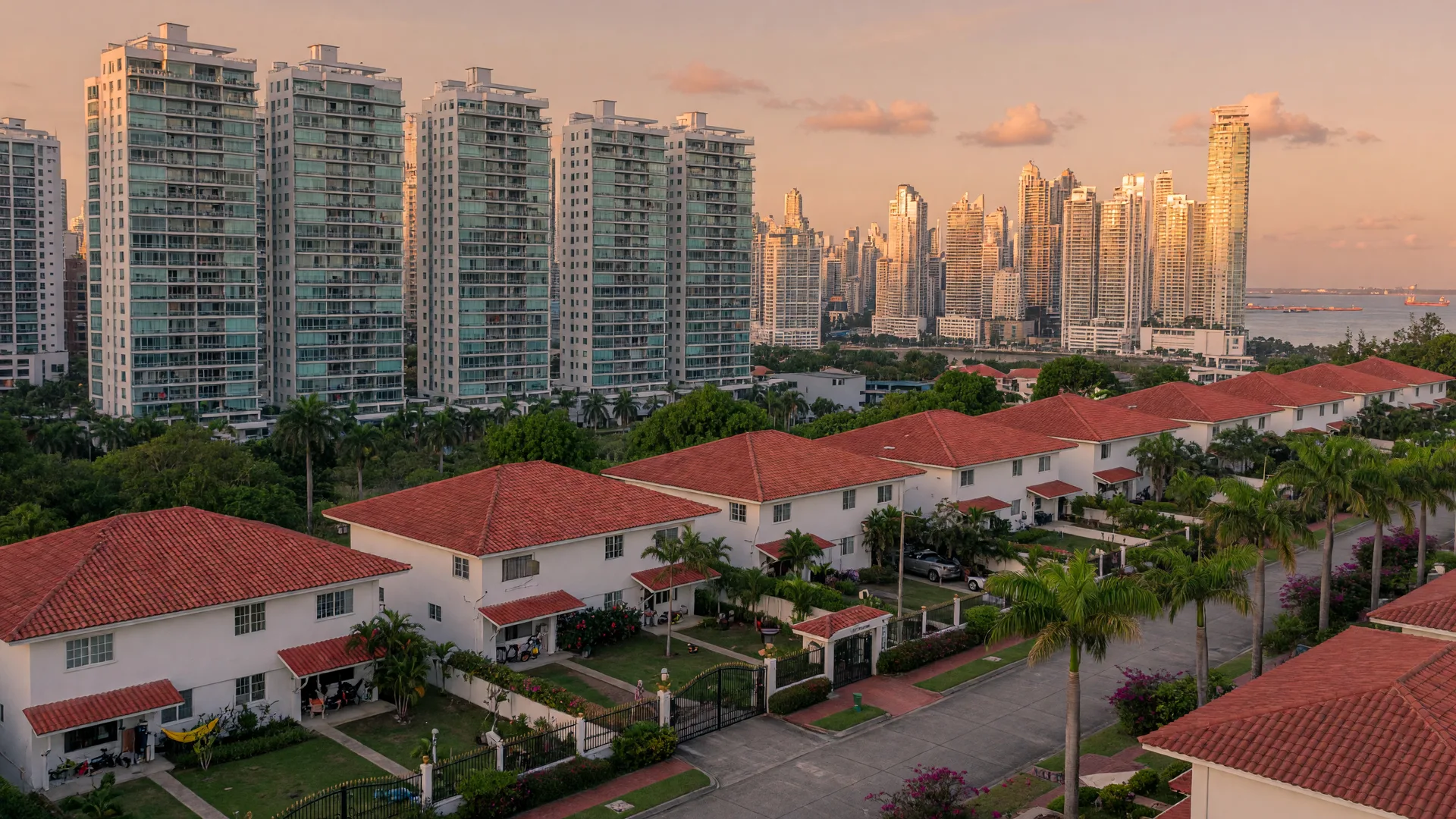
The honest answer is that the condo vs house in Panama question is not one decision but three: a decision about a market, a budget, and a lifestyle. Panama City is a vertical city where condominiums dominate, Coronado and the Pacific coast offer both types at overlapping prices, and Boquete is a house market where a condo is the exception. The question to ask is not which type is better, but which type fits the place you have chosen and the way you will actually use the property.
In this guide I compare the two property types across Panama's main markets for international buyers, covering real asking prices, monthly ownership costs, rental returns, financing, and the legal structure behind each. After more than ten years helping buyers across Panama City, the Pacific beaches, and the highlands, the pattern is consistent: buyers who match the property type to the market and their own plans decide better than those who arrive with a fixed preference.
Panama City Is a Condo Market, and That Matters
The first fact every buyer should absorb is that Panama City is built upward. Market analyses estimate that apartments and condominiums represent roughly 70% to 80% of Panama City's residential market, and about 60% to 65% of visible listings across the country. The central and waterfront districts, San Francisco, El Cangrejo, Obarrio, Punta Pacifica, Avenida Balboa, and Costa del Este, are dense tower neighborhoods where a house on its own titled lot is rare and expensive.
That concentration shapes everything else. If you want a house in the city, you compete for a scarce product at a premium, and on a budget you look outside the urban core, in areas like Clayton or farther into Panama Oeste. Most international buyers of Panama City property, for lifestyle or investment, end up with a condominium, because that is where the inventory, the amenities, and the rental demand are.
Condo vs House Prices Across Panama's Main Markets
Asking prices in 2026 vary sharply by market, and the balance between condos and houses is different in each one. The table below shows typical 2026 asking prices for the markets international buyers actually compare, based on public listings and market analyses.
| Market | Condos and apartments | Houses |
|---|---|---|
| Panama City | One-bedrooms from about $120,000; typical two-bedrooms $250,000 to $400,000; three-bedrooms $350,000 to $500,000+; waterfront towers from $500,000 | Scarce in the urban core; comparable three-bedroom houses $450,000 to $600,000; most single-family stock sits in outer districts |
| Coronado and the Pacific beaches | Registry-verified resales from about $120,000 to $200,000; oceanfront two to three bedrooms $180,000 to $500,000 | Typical $250,000 to $400,000; beach and oceanfront homes from about $200,000 up to $600,000 |
| Boquete and the highlands | Rare and newer, roughly $180,000 to $500,000 | Local-style homes $80,000 to $150,000; expat homes with views $150,000 to $350,000; premium homes $350,000 to $600,000 |
Three patterns stand out. In Panama City the condo is the value entry point and the house is the premium; in Coronado the two types overlap, with premium beachfront condos costing as much as houses; and in Boquete the house is the dominant and more affordable choice, while a condo is a newer, narrower niche. If your budget is $300,000, Panama City points you to a two-bedroom condo, Coronado to a condo or a modest house, and Boquete to a solid house with land and possibly a view.
The Real Cost of Ownership: HOA Fees and Property Taxes
The purchase price is only the beginning, and the monthly difference between the two types is one of the biggest surprises for new buyers. A condominium always carries a maintenance fee, the cuota de mantenimiento, that covers security, common areas, amenities, and sometimes water and gas. A house in a gated community pays a similar fee through its PH, while a standalone titled house outside any community has no association fee at all.
| Property type | Typical monthly fee (2026) | What it covers |
|---|---|---|
| Condominium in a Panama City tower | $1.20 to $4.50 per m², most buildings $2 to $3 per m²; about $120 to $450 a month for a 100 m² unit | Security, common areas, pool and gym, building insurance, often water and gas |
| House in a gated community (PH) | About $1.00 to $1.10 per m² of lot; roughly $245 to $385 a month | Gated security, roads, common green areas, community infrastructure |
| Standalone titled house (no PH) | None | You maintain everything yourself |
Luxury towers and branded residences can charge $5 to $7 per square meter, or $750 to more than $1,000 a month on a larger unit, so budget it as a real line item. A gated-community house fee, by contrast, is tied to lot size, not construction, so two homes of different size on the same lot pay the same.
Property taxes, by contrast, do not care about the type of building at all. The annual IBI is charged on the registered cadastral value, with one schedule for a primary residence and another for investment or second homes. Primary residences are exempt on the first $120,000, then pay 0.5% up to $700,000 and 0.7% above. Investment and second homes are exempt on the first $30,000, then pay 0.6% to 1.0% by bracket. New constructions often benefit from a 20-year exemption on the construction value, so a new condo and a new house in the same market can pay very little tax in the early years. For the full picture, see our Panama property tax guide.
Condos vs Houses for Rental Income and Investment
For investors the numbers lean consistently toward condominiums in the city. Global Property Guide put Panama City's average gross rental yield at about 7.6% in 2026, with apartments running around 7.7% and the strongest neighborhoods, such as El Cangrejo, closer to 8.5%. Across the city, condominium asking rents run about $14.70 per square meter, versus $9.12 for houses, so a condo earns roughly 40% more per square meter while carrying a similar per-square-meter price. Net yields, after fees, vacancy, and management, typically land between 3.5% and 5.5%.
| Panama City (2026) | Gross yield | Rent per m² |
|---|---|---|
| One-bedroom condo | About 8.4% | About $14.70 (apartment average) |
| Two-bedroom condo | About 8.1% | About $14.70 (apartment average) |
| Three-bedroom condo | About 7.5% | About $14.70 (apartment average) |
| Houses | No published series; generally lower | About $9.12 |
Beach markets like Coronado are different: they are seasonal, with occupancy concentrated in the dry season, and furnished beach condos often outperform houses for short-term rental. Before you buy for income, read our guides on whether Panama real estate is a good investment and whether Airbnb is profitable in Panama, because the 45-day licensing rule and seasonal demand change the math.
The Legal Side: Same Regime, Different Structures
Many international buyers assume a condo and a house are legally different animals. In Panama, the more useful way to think is this: a tower apartment and a house in a gated community are both governed by the same Propiedad Horizontal (PH) regime, established by Law 31 of 2010 and now governed by Law 284 of 2022, which covers towers, gated communities, and subdivisions. Under PH you own your unit or home outright plus an undivided share of the common land and facilities, and an owners' association manages the property and collects the monthly fee.
A standalone house on titled land outside any PH is different: it is a fee-simple finca, meaning you own the land and the building outright, with no association and no monthly fee. Both structures are registered titled property, which matters because banks lend only against registered title, and both support mortgages for foreign buyers.
Two ownership risks deserve special attention. First, the coastal strip: the first 20 to 22 meters from the high-tide line on the Pacific is public domain and cannot be privately titled, and the wider maritime-terrestrial zone runs 200 meters inland, so beachfront purchases must be on titled land set back from the strip. This rule applies to the land, not the building, so a condo tower and a house face the same constraint. Second, watch for rights of possession (derecho posesorio) instead of titled land, especially on the coast and near the borders; it cannot be mortgaged and carries overlapping-claim risk. See our guide to buying safely in Panama for the full due-diligence checklist.
Financing a Condo vs Financing a House
Foreigners can finance both condos and titled houses, but the terms are stricter than in North America. Banks generally require a 30% to 40% down payment, offer 60% to 70% loan-to-value, and cap terms around 20 years for non-residents. Foreigners typically pay 7% to 9% plus a 1% FECI fee on non-primary homes, compared with about 5.7% to 5.9% for Panamanian citizens; the Superintendency of Banks reference rate stood at 6.50% in the first quarter of 2026. Registered condo units are the easiest product to underwrite, and a gated-community house is financeable when the lot is titled and the PH is registered.
The practical consequence is that a house on rights-of-possession land, or any property without a clean registered title, is effectively a cash purchase, and that usually changes the negotiation. Before you borrow, read our 2026 mortgage guide, and remember that buyer closing costs run about 2% to 2.5% of price (legal fees, registry, notary, and often escrow), with the 2% transfer tax customarily paid by the seller.
Pros and Cons: Condo vs House in Panama
| Condominium | House | |
|---|---|---|
| Entry price | Lower in Panama City and most beach markets | Higher in the city; lower in Boquete |
| Monthly costs | Cuota of $120 to $450 or more a month | PH fee of $245 to $385, or none on standalone title |
| Lifestyle | Pool, gym, security, lock-and-leave | Land, garden, privacy, more upkeep |
| Rental income | Higher yield per square meter in the city | Lower per square meter, but more space to rent |
| Resale market | Deep, active buyer pool in towers | Thinner in the city; strong in Boquete |
| Autonomy | Association rules and fee increases | Full control on standalone title |
Neither column wins outright; the winner is the type that matches your market and your plan. Lock-and-leave security in Panama City points to a condo; a garden, privacy, and the freedom to renovate point to a house, even at a higher price in the capital.
How to Decide: A Practical Checklist
Use this sequence instead of a preference-based shortcut; it is the same process we run with clients.
- Choose the market first. Decide whether you want city, beach, or highlands, because the condo-house balance is set by the market, not by you. Compare regions honestly in our best places to live guide.
- Set your real budget. Include the down payment, 2% to 2.5% closing costs, and the monthly fee of the property type you are considering.
- Define how you will use it. Full-time residence, seasonal home, or rental income point to different types; a rental usually favors a city condo, a seasonal beach home can favor either.
- Walk the actual property. Visit the exact unit or house, the building, the community, and the neighborhood at different times of day before you commit.
- Verify title with an independent attorney. Confirm registered titled property, a clean history, and for beachfront, that the land sits outside the public zone.
- Underwrite the monthly total. Add the cuota or PH fee, IBI property tax, utilities, and insurance, and compare the two types on the same 10-year horizon.
The Honest Answer: Condo vs House in Panama
There is no universal winner between a condo and a house in Panama, and anyone who tells you otherwise is selling something. In Panama City, buy the condo: it is the market's default, the value entry point, and the strongest rental product. In Boquete, buy the house: it is what the market offers, and it costs less. On the Pacific coast, let the specific property and its beachfront status decide, because both types compete on the same lots.
Buyers who match the property type to the market and their own plans, and who verify title and budget the monthly costs, make confident purchases. That is exactly the kind of guidance we give every week at Panama Property Experts, and we will tell you when a condo or a house, or a whole area, is not right for you, even when it means no sale. That honesty is the point of working with an advisor who knows all of Panama, not just one type of property.
Frequently Asked Questions
Is it better to buy a condo or a house in Panama?
It depends on the market and your plan. Condos dominate Panama City and most beach markets, cost less to enter, and rent for more per square meter. Houses offer land, privacy, and no association fee on standalone title, and they are more common and cheaper in Boquete. Match the type to the place and your lifestyle rather than to a fixed preference.
Are condos cheaper than houses in Panama?
In Panama City and most beach markets, yes: a typical two-bedroom condo lists around $250,000 to $400,000, while a comparable three-bedroom house runs $450,000 to $600,000. In Boquete the reverse is true, with houses from about $80,000 and condos rare and costlier.
How much are condo maintenance fees in Panama?
Most Panama City towers charge $1.20 to $4.50 per square meter a month, or about $120 to $450 for a 100 m² apartment, with luxury buildings up to $5 to $7 per m². Gated-community houses pay roughly $245 to $385 a month based on lot size, and a standalone titled house pays no association fee.
Do foreigners pay higher property taxes on a condo or a house?
No. Property tax in Panama is based on cadastral value, not the type of building. Primary residences are exempt on the first $120,000 and pay 0.5% to 0.7% above; investment and second homes are exempt on the first $30,000 and pay 0.6% to 1.0%. New constructions often carry a 20-year exemption on the construction value.
Can foreigners get a mortgage for a condo or a house in Panama?
Yes, for both, as long as the property has registered titled land. Foreigners typically need 30% to 40% down, get 60% to 70% loan-to-value, and pay 7% to 9% plus a 1% FECI fee on non-primary homes. Rights-of-possession land cannot be financed.
Are condos or houses better for rental income in Panama?
In Panama City, condos earn more per square meter, about $14.70 versus $9.12 for houses, with gross yields commonly 7% to 9% in the best neighborhoods. Beach markets are seasonal, and short-term rentals face a 45-day licensing rule, so run the numbers on the specific property before you buy.
Is beachfront property better as a condo or a house?
The legal rules apply to the land, not the building: the first 20 to 22 meters from the high-tide line is public domain and cannot be titled. Both condos and houses must sit on titled land set back from the strip. Beyond that, the choice is lifestyle and price, and the two types overlap in Coronado and the Pacific corridor.
Which is easier to resell in Panama, a condo or a house?
Condos have the deeper buyer pool in Panama City and most beach markets, so they tend to sell faster. Houses are easier to sell in Boquete, where they are the dominant product. In every market, a clean registered title and realistic pricing matter more than the property type.
Still Deciding Between a Condo and a House in Panama?
Choosing the right property type in the right market is exactly the kind of decision we help clients make every week, and we will give you the good, the bad, and the reality of each option for your budget and lifestyle. Call us at +507-6356-7777, message us on WhatsApp at wa.me/50763567777, or email info@panamapropertyexperts.com, and we will help you compare markets, run the numbers, and find the right property anywhere in Panama.
Sources and References
- Global Property Guide: Gross Rental Yields in Panama
- Global Property Guide: Panama Residential Market Analysis 2026
- Panama Equity: Typical Condo Association Fees in Panama
- The Latinvestor: How Much Does an Apartment Cost in Panama City?
- The Latinvestor: Rental Yields in Panama City
- Órgano Judicial: Ley 284 de 2022 on the Régimen de Propiedad Horizontal
- Kraemer & Kraemer: Panama Property Taxes
- RG Law Firm: Panama Residential Real Estate for Foreigners
- The Latinvestor: Buying Land as a Foreigner in Panama
- Jarnias Cyril: Panama Real Estate Prices 2026 Market Comparison