Quick Answer
Yes, foreigners can buy land in Panama, with the same property rights as citizens under Article 47 of the Panamanian Constitution and no residency requirement. The two conditions that matter: the land must be titled land registered with its own finca number in the Public Registry, and it cannot sit within 10 km of Panama's borders. Do not buy beachfront parcels marketed as land, because much of the coastal strip is public domain.
Key Takeaways
- Foreigners have the same rights to own land as Panamanians under Article 47 of the Constitution, with no residency requirement and no citizenship test.
- Only titled land registered in the Public Registry with a finca number gives you real ownership; "rights of possession" is not title and is the most common source of land disputes.
- You cannot buy land within 10 km of the Costa Rica or Colombia borders, and indigenous comarcas and military zones are off-limits to private buyers.
- The coastal strip up to 22 m inland on the Pacific and 10 m on the Atlantic from the high-tide line is public domain and cannot be privately titled; treat any "beachfront land" listing with suspicion until a lawyer verifies it.
- Verify ownership yourself through the online Registro Público (www.rp.gob.pa), matching the seller's name to the recorded owner before you pay a cent.
- Ownership only transfers when your deed is registered in the Public Registry, usually 10 to 12 business days after notary signing; a promise contract does not make you the owner.
- Budget roughly 2% to 4% of the purchase price on top of the land for transfer tax, notary, registry, legal fees and the survey.
Disclaimer: this article is general information, not legal, tax or investment advice. Panama's land registry, coastal-zone and property-tax rules change and vary by municipality. Confirm every figure and requirement with a licensed Panamanian attorney, an agrimensor-supervised survey and the Registro Público before committing to any purchase.
Can Foreigners Buy Land in Panama?
Yes. Under Article 47 of Panama's Constitution, foreign citizens enjoy the same rights and obligations as Panamanians when it comes to acquiring real property. You do not need residency, citizenship, a work permit or a local partner to buy land, and you can hold it in your own name, jointly, or through a Panamanian corporation. Transactions settle in U.S. dollars, which has been Panama's legal currency since 1904, so there is no currency conversion to manage.
The limits are narrower and specific rather than general. Foreigners cannot acquire land within 10 km of the Costa Rica or Colombia borders, a national-security rule that bars both individual foreigners and Panamanian companies with any foreign capital. Indigenous comarcas (semi-autonomous territories) and military zones are also off-limits to private buyers, Panamanian or otherwise. Everywhere else, and outside those restricted areas, buying titled land works much as it does in your home country, with a few process differences that matter.
The word that keeps appearing is titled. Panama distinguishes sharply between land that has been titled and registered in the national Public Registry and land people simply occupy or have been promised. That distinction is the heart of buying land in Panama, so let's make it concrete before anything else.
Titled Land, Rights of Possession, and Concessions: What You Are Actually Buying
When a Panamanian tells you they "own" a parcel, ask what kind of ownership they mean. Three very different situations get called property, and only one is safe.
| What you are sold | What it really is | Is it ownership? |
|---|---|---|
| Titled property (finca) | A registered folio with a unique finca number in the Registro Público, listing the legal owner | Yes, full fee-simple title protected by law and bankable |
| Right of possession (derecho posesorio) | A personal right to occupy and use State land, documented only by private/notarized papers, with no finca number | No. Not registered, not mortgageable, sold to overlapping buyers |
| Coastal concession (concesión) | A temporary State license to use a strip of public beach | No. It is a lease-like permission for a limited term |
Rights of possession, sometimes written as "ROP" or derecho posesorio, is the single biggest source of land trouble in Panama. It is a right to occupy government land, usually stitched together from notarized letters and occupation history, and it carries no number in the Public Registry. Because it is not registered, the same parcel can be "sold" to several buyers at once, none of whom can mortgage it or defend true title. Some rights of possession later get titled through the state titling process (ANATI), but that takes years and is never guaranteed. For a buyer, treat it as a red flag, not an opportunity.
A concession is different again. Panama's coastal strip is public domain, so a seaside plot marketed to you may actually be a State concession, a limited-term license (typically up to 20 years, capped at 25,000 m² under Ley 35 de 1963) to use public beach, not a fee-simple deed. You cannot build permanently, mortgage or resell it like titled land. If a seller cannot show a finca number, slow down.
The Maritime-Terrestrial Zone and Beachfront Land
Beachfront is where land rules in Panama are easiest to misunderstand, and where an otherwise sensible article turns cautionary. Under Ley 80 de 2009 and the definitions applied by ARAP, the national water-resources authority, the coastal zone is a 200-meter strip measured inland from the ordinary high-tide line, and most of it is State land. Within that strip, the public beach runs from the high-tide line 22 meters inland on the Pacific coast and 10 meters inland on the Atlantic coast, and this public strip can never be privately titled by anyone, foreigner or Panamanian.
The public strip can only be used by concession, and under Ley 2 de 2006 (the island and tourism regime) the first 10 meters from the high-tide line can never even be concessioned; only the band roughly 10 to 22 meters in may be. What that means on the ground: a "beachfront land in Panama" listing is very often a concession or a rights-of-possession claim, not registered title. Genuine private title to coastal land exists only for parcels beyond the public strip, or for specific historic titles registered before today's rules, and it is resolved through ANATI under strict possession rules that exclude beaches, riverbanks and ports.
If your whole plan is to own and build oceanfront, this is not a deal-breaker, but it is a mandatory lawyer-and-survey step. Before you commit, have the survey measured from the high-tide line, confirm exactly which title type you are buying, and get the distance in writing. A surprising number of the best-priced "beachfront" lots in Coronado, San Carlos and Playa Venao turn out to be concessions or possession rights rather than fincas.
How to Verify a Clean Title Before You Pay Anything
Verifying title in Panama is genuinely possible to do yourself, and you should, before paying a deposit or signing a promise contract. Every titled parcel appears in the national Registro Público (www.rp.gob.pa) under a unique finca number. Ask the seller for that number and search it yourself, or have your own lawyer run the search. Confirm the current owner listed matches the person selling to you, then scan the history for mortgages, liens, court attachments, easements and annotations. A titled property that is clean will show an uninterrupted chain to the correct owner; anything missing, contradictory or "to be checked later" is a reason to pause.
Understand, too, what a document is and is not. A promise to purchase (promesa de compraventa) is only a contract to buy at a future date; it does not transfer ownership. Title passes when the notarial deed (escritura pública) is signed and then registered in the Public Registry under your name. Until the record shows you, the land is not legally yours. Structure your own purchase the same way, and never transfer full payment before your lawyer confirms the final registration. The combination of a self-run Registry search and a final registered deed is the whole game for staying out of the scams that give Panama land a bad name.
The Step-by-Step Process for Buying Land
Buying land in Panama follows the same deed-and-registry path as any titled purchase, with the survey given extra weight because raw land often has no recorded survey plan. The sequence below is the one most Panamanian attorneys run.
1. Find the parcel and assess your goals
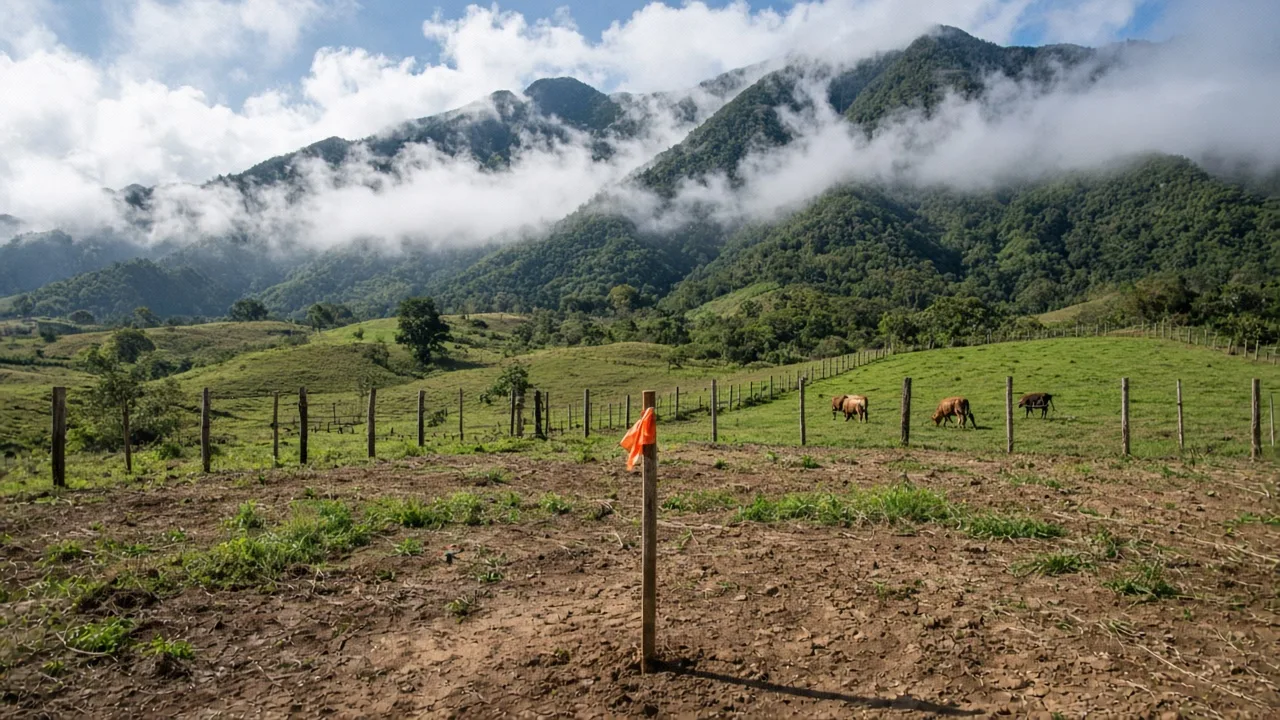
Decide what the land is for before you look, because the answer changes every later step. A titled lot for a retirement home near Boquete, a beach-headed parcel near Coronado, and an agricultural investment in the Chiriquí highlands are different purchases with different checks.
2. Run due diligence and the Registry search
Get the finca number, order a Certificado de Registro in the Public Registry, and check for liens, mortgages, easements and tax arrears. Confirm property taxes are current, because unpaid local and national taxes can follow the land.
3. Commission a licensed survey
For raw land, hire a licensed Panamanian surveyor (agrimensor) to run a certified cadastral survey with corner markers that confirm the boundaries against the registered plan. This step protects you from buying a parcel whose real footprint is different from the pretty map, a common and expensive surprise.
4. Draft and sign the public deed
Your attorney drafts the minuta (deed draft), and you sign the escritura pública before a Panamanian notary, in U.S. dollars. If you are buying through a corporation, the corporate documents must be in order first.
5. Pay transfer tax and fees
Settle the ITBI transfer tax (2% of the sale or cadastral value, legally the seller's obligation but frequently negotiated), the notary fee and the registry inscription fee, then file the deed.
6. Register the deed
The Public Registry processes the inscription, typically in 10 to 12 business days. Registration is what makes the transfer effective against third parties, so keep this as a hard done-deal step, not a paperwork afterthought.
How long does the whole thing take? A straightforward cash purchase on clean titled land usually closes in 4 to 8 weeks once the survey is launched; a parcel with rights-of-possession issues, a pending titling application, or family ownership complications can drag on for months or fail entirely. That variance is why a knowledgeable local attorney is not optional.
Costs of Buying Land in Panama
Plan for roughly 2% to 4% of the purchase price on top of the land, and be aware that several percentages are legally assigned to one party but negotiated between buyer and seller. The table shows typical buyer-side figures as of November 2026; every line varies with the notary, the value declared and the parcel's location.
| Cost | Typical amount (buyer side) | Notes |
|---|---|---|
| ITBI transfer tax | 2% of higher of sale or cadastral value | Legally the seller's, often split or paid by buyer |
| Notary fee | about 0.1% to 0.25% (commonly US$200 to US$800) | Scales with deed length |
| Registry inscription | about 0.2% to 0.3% of value | Minimums around US$200 to US$500 apply |
| Attorney fee | about 1% to 1.5% of value | Includes due diligence and closing |
| Survey (raw land) | US$300 per lot, or US$150 to US$500 per hectare | Topographic surveys cost more |
Beyond closing, unbuilt land carries property tax. Under Ley 66 de 2017, the national real-estate tax (Impuesto de Inmuebles) applies to land with or without a building, at progressive rates: 0% up to US$30,000 of taxable value, 0.6% on US$30,001 to US$250,000, 0.8% on US$250,001 to US$500,000, and 1.0% above US$500,000. There is no national surcharge simply for leaving a lot unbuilt, but municipalities add their own local tax on empty lots (solares sin edificar) under Ley 106 de 1973; Panama City, for example, levies a municipal tax of 1% a year on the cadastral value of undeveloped lots in its urban center, and other districts charge fixed annual fees per square meter. Agricultural land registered with the Ministry of Agricultural Development can be exempt up to US$150,000 (Art. 764 of the Fiscal Code). Ask your attorney to quantify the exact municipal bill for your municipality, because it is the figure most buyers never planned for.
Financing Your Land Purchase
You do not need residency to buy land, but you may need more cash than residents do to finance it. Panamanian banks lend to foreigners on tougher terms than citizens: non-residents typically get 60% to 70% loan-to-value (30% to 40% down) versus 80% to 90% for residents, with mortgage rates around 7% to 9% for foreigners compared with roughly 5.7% to 5.9% for citizens, plus a 1% FECI tax on non-primary dwellings.
Raw land is the hardest category of all. Banks are selective about financing unbuilt land: it must be fully titled in an area with established infrastructure, down payments run 40% to 50%, rates climb to about 8% to 10%, and terms shorten to 5 to 15 years. Raw or rural lots often get no bank financing at all, so seller financing is the common alternative, typically 30% to 40% down, interest around 6% to 8%, over 15 to 20 years. Whichever route you use, have the registered finca number confirmed before you sign a loan, because a lender will not touch a title that is not clean and bankable. Full details on foreign mortgage terms and the how and why to get a mortgage in Panama.
Risks and Common Mistakes
The risks in buying Panamanian land are concentrated in a handful of well-understood traps, and every one is avoidable with the right checks. The most common mistakes, from years of seeing clients:
- Paying for rights of possession as if it were title. If there is no finca number, you are not buying ownership. Run an independent Registry search before money changes hands.
- Trusting a promise contract for ownership. A promesa is a contract for the future, not a deed. Ownership exists only after the notary deed is registered.
- Buying "beachfront" without measuring from the high-tide line. Public beach cannot be titled; verify the exact title type and the survey line.
- Skimping on the survey. Unrecorded boundaries are an invitation to buy a different parcel than you think, or to inherit a neighbor dispute.
- Ignoring unpaid tax. National and municipal arrears and the local tax on unbuilt lots can attach to the land.
- Not checking the 10 km border rule. Some of the cheapest land in Panama hugs the border zones, where foreigners cannot buy at all.
Where to Buy Land in Panama: Quick Market Notes
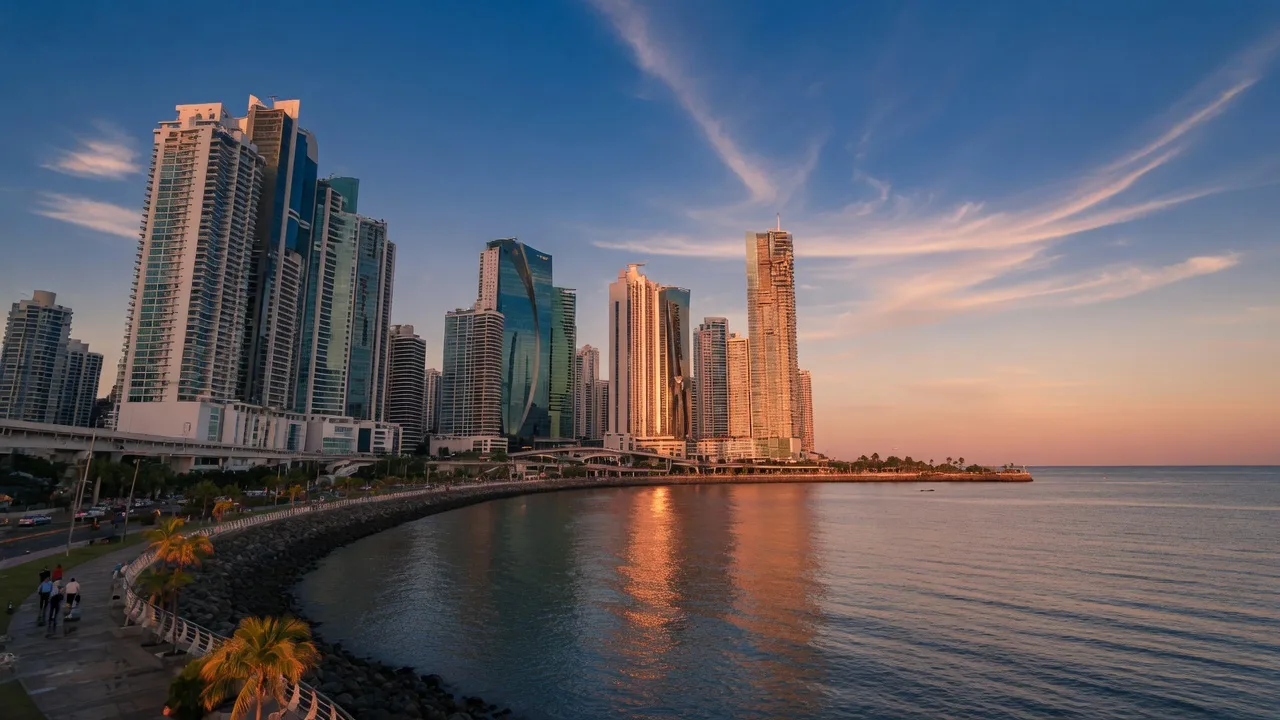
Once the mechanics are understood, location drives everything. The highlands around Boquete and the crater-circle town of El Valle de Antón offer titled parcels with mountain views and a built-in retiree community, with prices that range widely by elevation and infrastructure. The Pacific beach corridor, from Coronado and San Carlos through Playa Venao and Pedasí, is where the beachfront caveats above bite hardest, and where a good attorney and survey earn their fee. Closer to Panama City, land in the outlying districts of the province is catching development pressure as Metro Line 3 extends west. Every market has its own municipal tax, zoning and titling history, so comparison-shopping markets also means comparison-checking titles; for where prices and inventory stand today, our latest Panama real estate market report covers each region, and our Panama buying guide walks through the full buying process.
Frequently Asked Questions
Can a foreigner buy land in Panama?
Yes. Article 47 of the Constitution gives foreigners the same real-property rights as citizens, with no residency or citizenship requirement. The main limits are the 10 km border zones, indigenous comarcas and military zones, which are off-limits, and the public coastal strip, which cannot be privately titled. Elsewhere, a foreigner may buy titled land in their own name or through a Panamanian corporation.
Do I need residency to buy land in Panama?
No. Buying property does not require residency, and buying alone does not grant it. These are separate processes. Many buyers purchase land first and pursue a residency program later, whether the Pensionado, Friendly Nations or Qualified Investor route, but each is its own application with its own rules.
Can I buy beachfront land in Panama?
Usually not as fee-simple title on the strip itself. The public beach from the high-tide line, 22 m inland on the Pacific and 10 m on the Atlantic, is public domain and cannot be privately titled. What is often marketed as beachfront is a concession or rights of possession. Genuine private title exists only beyond the public strip, so always verify the title type and survey line.
What is derecho posesorio and why should I avoid it?
Derecho posesorio (right of possession) is a right to occupy State land, documented by private papers rather than a Registry folio. It is not registered, not mortgageable, and the same parcel can be sold to several buyers. If a seller offers it as land "ownership," treat it as a red flag and have a lawyer assess the titling path before you pay anything.
How do I verify that land has a clean title?
Search the parcel's finca number yourself in the online Registro Público (www.rp.gob.pa) and confirm the seller matches the recorded owner, then review the history for mortgages, liens, attachments and easements. A certified Certificado de Registro and a final registered deed in your name are the proof you need.
What are the closing costs when buying land?
Budget about 2% to 4% of the price on top of the land. The main items are the 2% ITBI transfer tax (legally the seller's, often split), notary and registry fees, legal fees of about 1% to 1.5%, and a survey that may cost US$300 a lot or US$150 to US$500 per hectare. Registration typically takes 10 to 12 business days.
Can I get a mortgage for raw land in Panama?
Sometimes. Banks require full title and established infrastructure, and lending on raw land is selective: down payments of 40% to 50%, rates near 8% to 10% and terms of 5 to 15 years. When no bank financing exists, seller financing is the common fallback, typically 30% to 40% down over 15 to 20 years.
How long does buying land in Panama take?
A clean cash purchase on titled land usually closes in 4 to 8 weeks once the survey is underway. Parcels with rights-of-possession issues, pending titling or family complications can take many months or fall apart entirely, which is exactly why due diligence and a good attorney come first.
Ready to Buy Land in Panama? Let.s Verify It Together
Buying land in Panama is rewarding and genuinely open to foreigners, but the difference between a great investment and a costly mistake is almost always in the title check, the survey and the coastal-zone rules. That is where an experienced local broker earns his keep. Call Panama Property Experts at +507-6356-7777, message us on WhatsApp at wa.me/50763567777, or email info@panamapropertyexperts.com, and we will help you compare the right markets and walk the verification steps with you before you commit.
Sources and References
- Panama Constitution, Article 47 (equal property rights for foreign nationals).
- Registro Público de Panamá (www.rp.gob.pa), official title and finca registry.
- Ley 80 de 2009 (beachfront "ribera de playa" and coastal-zone definition), Gaceta Oficial; administered by ARAP, the Water Resources Authority.
- Ley 35 de 1963 (occupation, use and concession of beaches and seashores), for the 20-year, 25,000 m² concession limits.
- Ley 2 de 2006 (island and tourism regime), public-strip concession rules.
- Ley 66 de 2017 (national real-estate tax rates), Dirección General de Ingresos (DGI/MEF).
- Ley 106 de 1973 (municipal taxing powers for unbuilt lots); municipal ordinances of Panama City, Balboa, Las Tablas and others.
- Art. 764 of the Fiscal Code (agricultural land exemption up to US$150,000 with MIDA registration).
- Legal and market guides on Panama land purchase, closing costs, financing and rights of possession (Díaz, Shacalo & Asociados; Living in Panama; Business Panama; Global Law Experts; Coastal Panama Properties), reviewed November 2026.