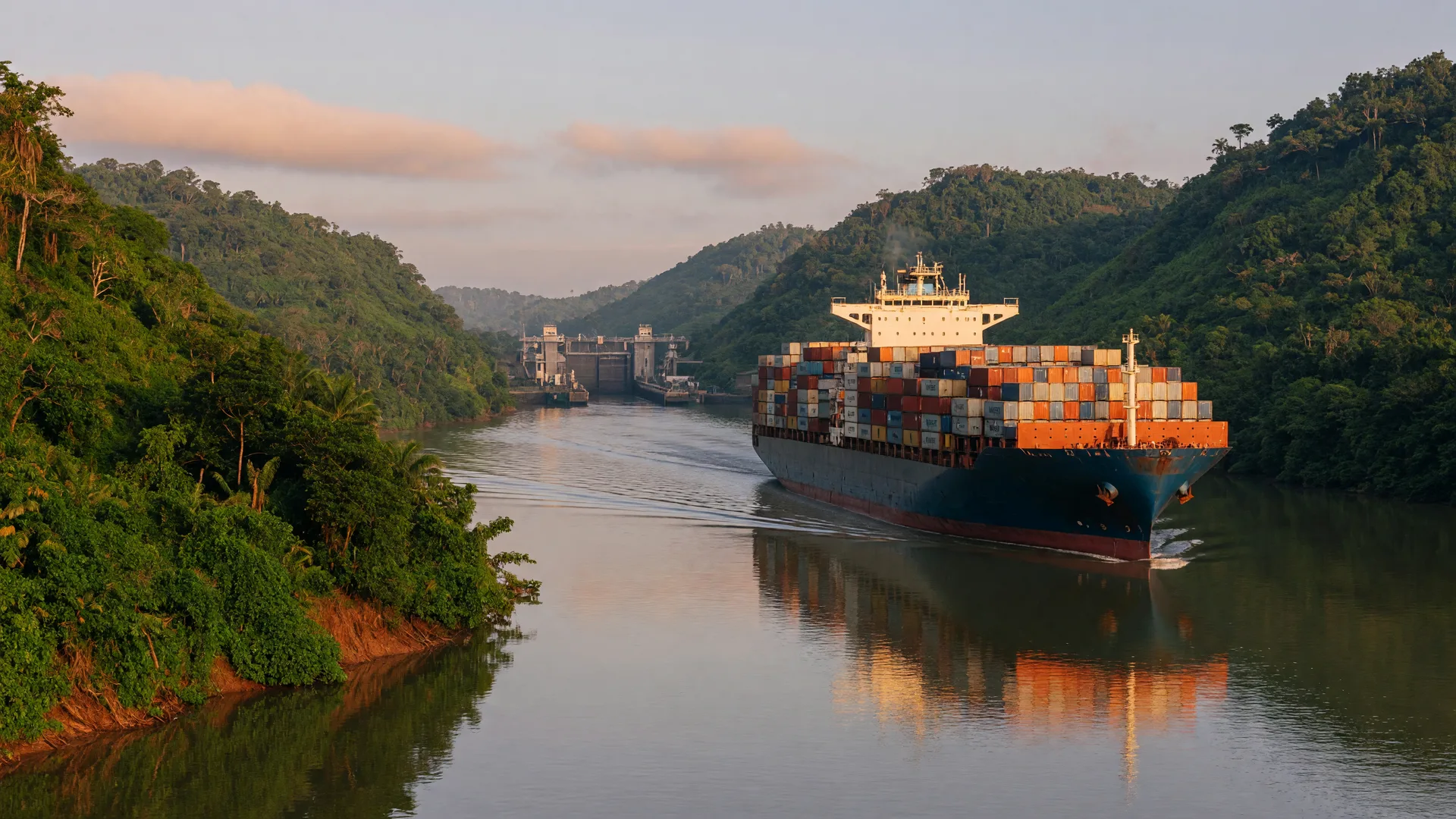
The Panama Canal Authority's Rio Indio reservoir project is approved and moving toward implementation, but it is not yet under construction. As CNN and The Guardian reported in mid-October, the plan would create a third water source for the canal by flooding roughly 4,600 hectares of the Rio Indio basin in central Panama. For landowners in that corridor, the distinction between approved and built matters.
What Happened
The plan dams the 98-kilometer Rio Indio in the Cocle and Colon provinces and carries water through a 9-kilometer tunnel into Lake Gatun, securing canal and national water supply for about 50 years and adding roughly 10 to 15 percent of operating capacity. The flood zone holds farms, schools, churches, and eight cemeteries, and displaces about 38 rural farming communities, roughly 550 families and 2,000 to 2,500 residents. Burials have ended at El Limon de Chagres and are due to stop at the other seven cemeteries in January 2027. The project is estimated at $1.5 to $1.6 billion, with about $400 million for compensation and resettlement. Relocation at El Limon is planned for 2027, with construction around 2028 and completion in the early 2030s.
Why It Matters for Property
For landowners inside the flood zone, this is a property story now. The ACP's Resettlement and Livelihood Restoration Plan sets out how compensation will be valued and paid, and families are being asked to relocate before construction begins. Verifying title, understanding the offer, and taking independent advice are the steps that matter. More broadly, a canal with secure water supports the economy that drives much of Panama's growth, the stability signal international buyers weigh.
What It Could Mean
Approval is not construction. The timeline can shift, and community opposition remains unresolved, including protests and criticism from farmer and indigenous organizations. The honest reading for buyers is long-term: the project shows how seriously Panama treats water security, and it deserves watching as it moves from approval toward the ground. If you hold land in the affected basin, the right first step is independent legal and valuation advice, not a rushed decision.
Related reading: the market report, the buying guide, the Panama FAQ, our canal fiscal year results, and our update on the canal's draft and transit changes. Questions about a specific situation? Contact Chad. No pressure, just good information.
Sources
- CNN: Panama Canal reservoir project expected to flood cemeteries, displace families (October 18, 2026)
- The Guardian: How drought is choking the canal that feeds a nation (October 20, 2026)
- Mongabay: In Rio Indio, farmers fight the Panama Canal reservoir project (June 16, 2026)
- Panama Canal Authority: Rio Indio Lake Project established as a top priority for national water security
- The Tico Times: Protests rise over the Panama Canal's new water project (July 2, 2025)
- Al Jazeera: Local communities vow to fight the new Panama Canal reservoir (May 21, 2025)